


The structural integrity and perceived value of jewelry packaging rely heavily on the interior components. While the outer box attracts the eye, the insert secures the product and dictates the unboxing experience entirely. Packaging buyers and jewelry brands must balance unit cost, transit protection, and premium aesthetics without compromising on material safety. Delicate earring posts require specific defense mechanisms against bending during transit. You also need to eliminate tarnish risks that can ruin product launches and damage brand reputation. This guide provides an objective, technical comparison of the four primary materials used for earring box inserts—paperboard, polyurethane (PU) foam, pure velvet, and ethylene-vinyl acetate (EVA). We evaluate these materials to inform scalable procurement decisions, breaking down exact performance metrics, material chemistry, and structural limitations.
Velvet-covered EVA foam offers the highest structural protection and premium presentation, making it the optimal choice for high-value e-commerce shipping.
Paperboard inserts provide the most sustainable, cost-effective solution for retail environments, though they lack the shock absorption required for fragile transit.
Standard PU foam delivers excellent lightweight cushioning but requires flocking to elevate its visual appeal and mitigate long-term degradation risks like yellowing.
Pure velvet excels in traditional luxury retail displays but offers minimal structural defense against drop impacts during fulfillment.
Table of Contents
E-commerce fulfillment demands rigorous shock absorption. Packages endure rough handling, conveyor belt drops, and heavy stacking across multiple sorting facilities. Vibration dampening prevents delicate components from snapping, and securing earring backs is mandatory during cross-country transit. Brick-and-mortar retail requires entirely different features. Presentation angle matters most in store displays, and customers need easy removal to inspect the jewelry without tearing the packaging.
Drop-test performance varies drastically between rigid and porous materials. Rigid boards transfer kinetic energy directly to the jewelry, increasing the likelihood of bent posts or shattered gemstones upon impact. Porous foams absorb and disperse this impact safely. Standard ISTA drop tests often reveal that rigid inserts fail to protect heavy statement pieces when dropped from a height of three feet onto concrete. You must match the material to your specific distribution channel to minimize return rates and product damage.
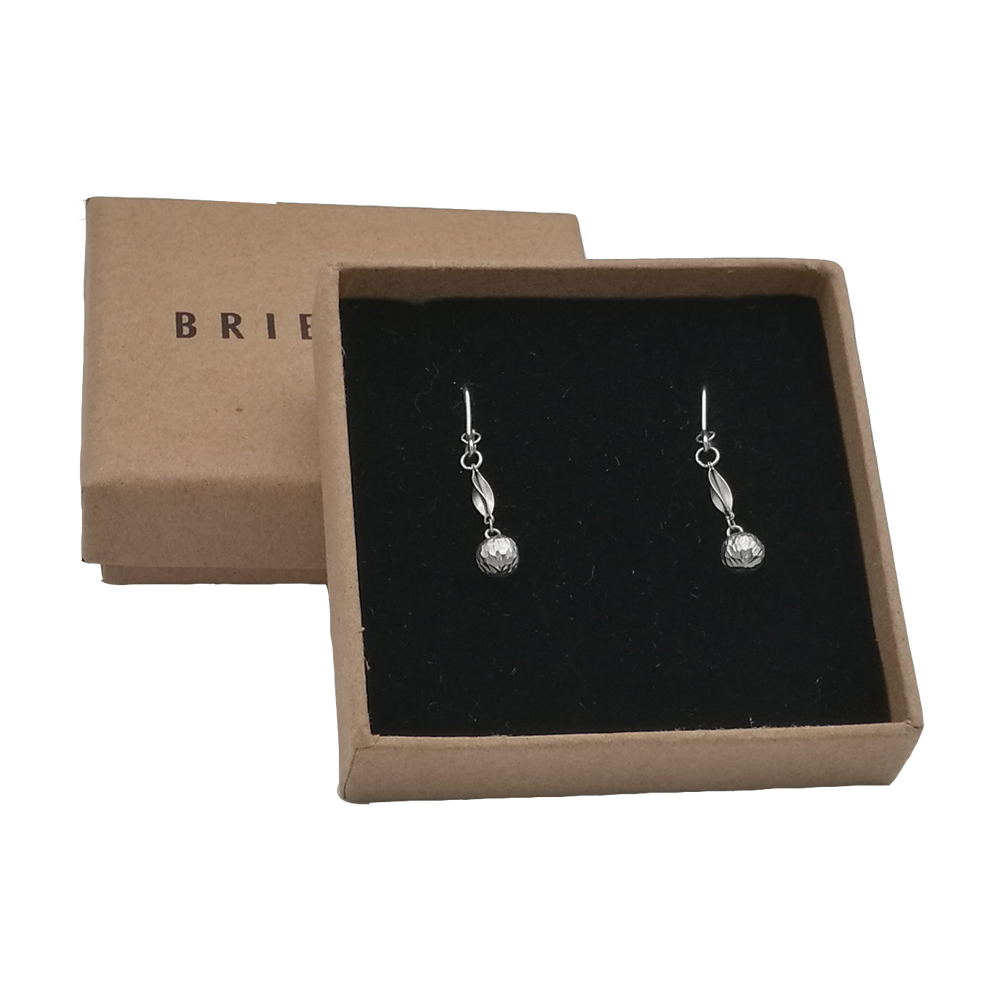
Sulfur-induced tarnishing destroys silver and base metal jewelry. Cheap adhesives often contain harmful chemical compounds that react with precious metals over time. Low-grade foam off-gassing accelerates the oxidation process rapidly, meaning you risk ruining entire inventory batches while they sit in warehouse storage. The chemical environment inside a closed jewelry box is highly concentrated, amplifying any negative reactions.
You must specify acid-free materials during the procurement process. Demand sulfur-free certifications from your packaging suppliers before signing purchase orders. Testing materials in advance using accelerated tarnishing protocols prevents catastrophic product damage. Clean chemistry ensures your jewelry remains pristine over long periods, protecting your brand reputation and reducing unsellable inventory.
Tactile feedback influences consumer perception heavily. Softness, density, and rigidity communicate retail value instantly. A dense insert feels intentional and high-end, while flimsy materials degrade the brand experience immediately. Visual impact relies heavily on the material finish. Matte paper suits minimalist or eco-friendly brands. Plush velvet elevates traditional luxury pieces. Uniform foam provides a clean, modern backdrop that lets the jewelry stand out.
Contrast these finishes against different metal tones and consider how gemstones reflect light against the insert background. Dark velvet absorbs light, making diamonds pop, while white paperboard offers a clean slate for colorful enamel pieces. Evaluate the mechanics of insert removal as well. Dense, tightly fitted materials require integrated ribbon pull-tabs to ensure a frictionless unboxing experience. Customers should never have to pry an insert out with their fingernails.
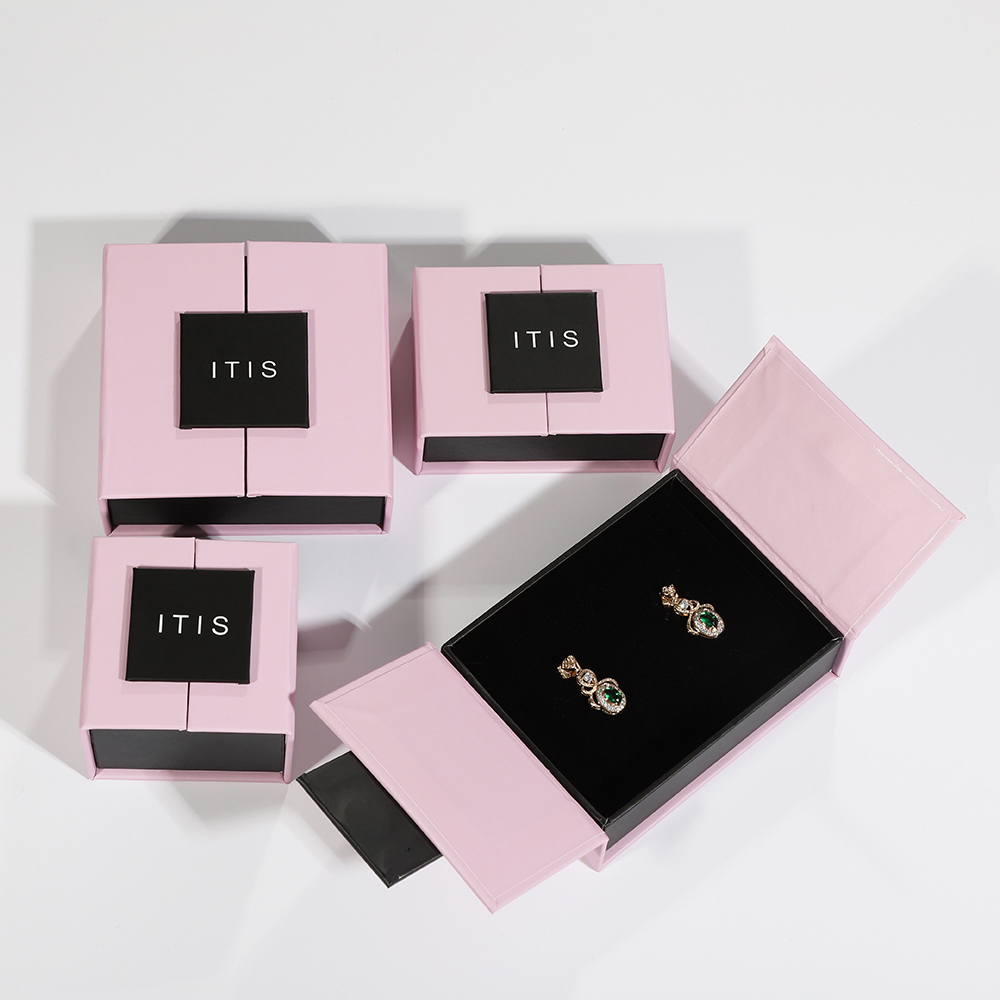
Standard paperboard consists of compressed paper pulp, while kraft paperboard utilizes unbleached fibers for higher tensile strength. Both options offer exceptional cost efficiency for large production runs. They ship flat to reduce freight volume, which slashes logistics expenses significantly. The minimal storage footprint benefits high-volume warehouse operations, keeping space optimized and highly organized.
The assembly process for paperboard inserts is straightforward but requires manual labor. Workers receive flat-packed paperboard sheets and fold them along pre-scored lines to create three-dimensional depth. Earring posts are manually inserted through the die-cut holes, and the assembled insert is pushed into the base of the outer box. You assemble the inserts only when needed, streamlining the packing process and keeping unused inventory flat.
Paperboard excels in specific retail scenarios. Lightweight stud earrings pair perfectly with thick cardstock because the weight does not stress the paper fibers. Fast-fashion jewelry relies heavily on this economical choice to maintain tight margins. Environmentally conscious brands prefer easily recyclable materials, often specifying FSC-certified paperboard to align with their sustainability goals.
In-store retail environments benefit greatly here because shipping impact is not a factor for direct physical sales. Customers carry the item home safely in shopping bags, so the structural limitations do not affect hand-to-hand transactions. The presentation remains clean and professional without the need for heavy-duty shock absorption.
Paperboard lacks volumetric cushioning entirely, providing zero shock absorption during transit. Drop impacts transfer directly to the earring posts. Heavy statement earrings pose a severe risk because their weight can tear the paper during shipping. The constant vibration of freight transport causes the metal posts to saw through the die-cut holes.
Repeated insertion and removal weaken the die-cuts, causing the paper fibers to fray and look unprofessional over time. If a customer removes the earrings to try them on and puts them back, the insert quickly loses its crisp appearance. You must evaluate these structural limits carefully and avoid using paperboard for heavy, fragile e-commerce shipments.
PU foam features an open-cell structure consisting of interconnected air pockets. This matrix disperses kinetic energy highly effectively, protecting delicate earring posts from bending. French wires remain intact during rough transit because the foam compresses and rebounds, absorbing the shock of sudden impacts. It acts as a miniature mattress for the jewelry.
Standard density options vary across manufacturers. Higher density increases insert rigidity and support, while lower density offers softer cushioning but less stability. You must specify the pores per inch (PPI) to maintain consistency across production batches. A rating of 40 to 60 PPI is standard for jewelry applications, providing a good balance of softness and structural integrity. Ratings of 80 PPI or higher offer a smoother surface but increase the raw material cost.
Raw PU foam looks industrial and cheap, resembling acoustic paneling or packing peanuts. Flocking solves this aesthetic problem completely. Manufacturers apply short fibers to the foam surface using a strong adhesive to bind the fibers. They use an electrostatic charge to ensure the fibers stand straight up, creating a plush, uniform pile.
This upgrades the visual and tactile quality instantly, mimicking the look of velvet. It offers a superior cost-to-value ratio, giving you luxury aesthetics without pure velvet expenses. Most mid-market brands utilize flocked foam successfully because it bridges the gap between basic protection and premium presentation.
Raw PU foam degrades over time, oxidizing when exposed to air. UV light accelerates this chemical breakdown, causing the foam to turn yellow and become brittle. Flocking hides some of this surface degradation, but the underlying structure still weakens eventually. If you store PU foam inserts in a hot warehouse for two years, they may crumble upon use.
Low-density open-cell foam presents another hazard: earring posts easily snag in the porous structure. Customers may struggle to remove their jewelry smoothly, pulling the entire insert out of the box by accident. Specify higher density foam to mitigate snagging risks and ensure a clean release when the customer pulls the earring.

Pure velvet fabric absorbs light beautifully, creating a rich, deep background for jewelry. This fabric wraps over rigid substrates like plastic boards or thick cardboard and associates strongly with heritage luxury brands. Leatherette offers a sleek, wipe-clean alternative, but velvet provides a plush, textured pile that feels inherently expensive.
Velvet excels at hiding puncture holes, so earring posts leave minimal visible damage upon removal. Paper and flat foam show every single pinprick clearly, whereas velvet maintains a pristine display appearance longer. The fibers brush back over the hole, concealing the entry point. This makes velvet ideal for retail displays where jewelry is frequently removed and replaced by sales associates.
Pure velvet lacks inherent shock absorption. The fabric provides excellent surface scratch protection but offers zero kinetic dampening for the jewelry piece. Drop impacts shatter fragile gemstone settings easily because the rigid boards underneath transfer all shock directly to the metal.
Pure velvet inserts require secondary outer cushioning, meaning you must use protective mailers or bubble wrap for safe transit. This adds steps to your fulfillment process and increases the overall package weight and dimensions. Relying solely on a velvet-wrapped board for e-commerce shipping guarantees a high rate of damaged returns.
Manufacturing pure velvet inserts requires intensive manual labor. Workers must wrap the fabric carefully, folding and gluing it around rigid boards. Corners require precise hand-finishing to look clean and avoid bulky fabric bunching. The adhesive application process is delicate; workers must use specialized glues that do not seep through the velvet pile and ruin the texture.
This manual process increases production time significantly. Tooling and assembly drive up the final unit cost, meaning you pay a premium for this traditional presentation. It remains best suited for high-margin boutique sales where the unboxing experience happens in-store, and the packaging serves primarily as a keepsake rather than a shipping vessel.
Ethylene-Vinyl Acetate (EVA) features a closed-cell structure that offers superior density and rigidity. The surface finish is remarkably smooth, outperforming standard PU foam in every structural metric. It does not compress easily, meaning it holds its shape under pressure and provides a firm foundation for heavy jewelry.
Laminating EVA with a velvet top layer creates a hybrid that bridges a major packaging gap. You achieve maximum structural protection simultaneously with the required luxury aesthetics. The velvet provides the soft tactile feel, while the EVA core absorbs heavy impacts. It dominates the premium packaging sector for good reason, offering the best of both worlds.
EVA's rigidity allows for highly precise manufacturing. Clean die-cuts hold heavy earrings securely without tearing or fraying. Engineers design multi-depth cuts for complex jewelry to accommodate the earring face perfectly while housing the butterfly or friction back seamlessly. The jewelry sits flush and remains immobilized, preventing transit damage effectively.
Standard Punch Hole: A simple circular cut for basic stud earrings.
H-Cut: A slit shaped like an 'H' that allows the foam to part and grip thicker posts securely.
T-Cut: A 'T' shaped slit ideal for French wires and hook-style earrings.
Multi-Depth Routing: CNC routed pockets that allow the entire earring face to sit flush with the surface, preventing the piece from shifting laterally.
Custom EVA molds require higher initial tooling costs because steel rule dies must be fabricated precisely. CNC molds for custom routed EVA can require significant upfront investment. However, the long-term consistency is unmatched. Every insert fits the outer box perfectly, and damage-in-transit rates drop to near zero.
This reduction in returns offsets the initial investment quickly. Velvet-covered EVA scales beautifully for premium brands and remains the top choice for earring box inserts. The investment protects your product, elevates your brand presentation, and standardizes your fulfillment operations.
Balancing budget and brand perception is critical. You must map costs against allowable packaging budgets, as retail price points dictate your material choices. A fast-fashion brand cannot support velvet-covered EVA, and a luxury jeweler cannot use raw paperboard. Tooling costs also play a role; steel rule dies for paperboard are inexpensive, while custom EVA molds require a larger capital outlay.
Table 1: Material Comparison Matrix
Material Type | Relative Cost | Perceived Value | Best Application |
|---|---|---|---|
Paperboard | Lowest | Economy / Eco-friendly | Fast fashion, retail studs |
PU Foam (Raw) | Low | Basic | Wholesale transit |
Flocked PU Foam | Medium | Mid-Market | Standard e-commerce |
Pure Velvet (Board) | High | Heritage Luxury | High-end boutique retail |
Velvet-Covered EVA | Highest | Modern Premium | Luxury e-commerce shipping |
Paperboard leads in end-of-life recyclability because consumers place it directly into standard recycling bins. PU foam and EVA head straight to landfills since they do not break down easily. Mixed-material velvet inserts complicate recycling efforts further because the glued components cannot be separated easily by consumers. The adhesive binds the fabric to the board permanently.
Emerging biodegradable foam alternatives exist today, such as mycelium and molded pulp, but they currently lack the refined finish jewelry requires. They often shed dust or feature rough textures that scratch delicate metals. The industry still struggles to balance luxury presentation with strict environmental sustainability.
Each material handles custom branding differently. Paperboard accepts hot stamping and crisp foil printing easily. EVA supports deep, precise debossing of logos directly into the foam. Velvet requires metallic foil heat transfers, which can sometimes crush the pile if applied incorrectly.
Layout flexibility drives operational efficiency. Universal layouts combine earring holes, ring slots, and necklace hooks, which reduces packaging SKU counts dramatically. Brands save warehouse space and simplify ordering because a single insert design accommodates multiple product lines. You do not need to order separate boxes for earrings, rings, and pendants.
Audit suppliers for strict REACH compliance and request accelerated tarnish testing documentation before committing to large minimum order quantities. The Oddy test is a standard procedure used to detect off-gassing in display materials. Place a polished silver piece in the sample box and seal it in a warm environment for two weeks.
Inspect the metal for any yellow or black discoloration. Reject any supplier failing this basic chemistry test. Tarnish ruins inventory and destroys customer trust, so protect your metal components proactively. Never assume a foam is jewelry-safe just because it looks clean.
Flocking sheds if applied poorly, and the adhesive layer can fail under stress. Extreme temperature fluctuations during ocean freight shipping cause peeling, separating the velvet-like fibers from the foam base. This leaves a messy, sticky residue directly on the jewelry.
Test sample inserts by rubbing the surface vigorously with your thumb to ensure the fibers remain firmly attached to the substrate. Check the edges for any signs of lifting or curling. Quality adhesives prevent unboxing disasters and ensure the insert looks pristine when the customer finally opens it.
Overseas manufacturing presents specific sourcing realities. Foam density varies wildly between production batches, and velvet dye-lots shift in color saturation. Custom-colored EVA requires massive minimum order quantities to justify the raw material dyeing process.
Small-batch or indie jewelers face prohibitive tooling costs for custom layouts. Utilize stock pre-cut flocked foam initially, or use standard paperboard to bypass heavy upfront investments. Scale into custom EVA molds as your volume grows, and build strong relationships with reliable packaging partners who understand jewelry-specific requirements.
Request physical samples of at least two different insert materials to evaluate tactile quality and structural rigidity firsthand.
Conduct standardized drop tests using your heaviest earring hardware to verify shock absorption and die-cut tear resistance.
Demand documented sulfur-free and REACH compliance certifications from your packaging supplier to eliminate tarnishing risks.
Calculate your maximum allowable packaging budget per unit to determine if custom EVA tooling or stock flocked foam fits your margins.
For jewelry brands developing custom packaging, working with an experienced manufacturer can also help balance insert protection, material selection, branding, and scalable production requirements. Shenzhen ITIS Packaging Products Co., Ltd. has around 20 years of experience in personalized jewelry packaging and provides one-stop services from design and sampling to production and delivery, with customized solutions for earring, ring, necklace, and bracelet packaging.
A: Velvet-covered EVA foam is the optimal material for shipping. It provides superior shock absorption to dampen transit vibrations. The dense closed-cell structure allows for highly secure die-cuts. This keeps heavy earrings firmly immobilized while maintaining a premium unboxing presentation for the customer.
A: Cheap industrial foam tarnishes silver jewelry rapidly. It off-gasses harmful chemicals and often utilizes sulfur-based adhesives. You must specify sulfur-free, jewelry-grade foam during procurement. High-quality packaging materials prevent oxidation and protect your metal components during long-term warehouse storage.
A: EVA features a dense, closed-cell structure. It is highly rigid, smooth, and provides precise die-cutting capabilities for heavy jewelry. PU foam utilizes an open-cell structure. It is squishy, lightweight, and less durable. EVA feels premium and structural, while raw PU foam feels industrial and porous.
A: Paperboard struggles significantly with heavy statement earrings. The weight easily tears the die-cut holes during transit. Paperboard lacks volumetric cushioning, meaning drop impacts can bend the earring posts. It is best suited for lightweight studs and controlled retail environments rather than e-commerce shipping.
A: A flocked insert features a velvet-like surface applied over a base material. Manufacturers spray short fibers onto a foam or plastic substrate using strong adhesives. This process upgrades the visual and tactile quality instantly. It provides a luxury feel without the high labor costs of wrapping pure velvet fabric.
A: Precise die-cut shapes secure the jewelry effectively. H-slits and T-cuts grip the earring post tightly. The material thickness must accommodate the friction back to lock the piece in place. Dense materials like EVA prevent the post from shifting or tearing the insert during rough transit.
A: Yes, universal die-cuts maximize insert utility. A single insert can feature earring holes, a central ring slot, and top necklace hooks. This consolidated layout reduces your packaging SKU count. It simplifies inventory management and ordering for brands with diverse jewelry collections.


