


The unboxing experience directly dictates the perceived value of a jewelry piece. Yet, packaging is frequently treated as an afterthought. This oversight leads to eroded margins and compromised brand equity. Customers judge the quality of the jewelry inside by the weight, texture, and structure of the box outside.
Jewelry brands must balance the aesthetic demand for a premium feel with strict operational constraints. You have to navigate dimensional shipping costs, tarnish prevention, retail display needs, and Minimum Order Quantities (MOQs). A beautiful box that crushes during transit or accelerates metal oxidation is a liability, not an asset.
Successfully sourcing a custom bracelet box requires moving beyond basic aesthetics. You must evaluate structural engineering, material science, total landed costs, and manufacturer capabilities. This guide breaks down the technical and logistical requirements for developing packaging that protects your product and elevates your brand.
Material selection dictates both shipping weight and perceived value; rigid boxes offer a premium unboxing experience but significantly increase freight and storage costs compared to folding cartons.
Anti-tarnish inserts and secure fitments (e.g., sulfur-free velvet, rigid C-cuffs) are non-negotiable technical requirements for protecting metal integrity during transit and long-term storage.
Unit cost is a flawed metric; procurement decisions must be based on total landed cost, which includes tooling, freight, warehousing footprint, and fulfillment assembly time.
Effective vendor vetting requires strict protocols for pre-production sampling (PPS), color-matching accuracy, and quality control tolerances.
Table of Contents
A bracelet box must provide strong protection during transportation. The outer structure should resist pressure and prevent damage from impacts during handling. Anti-tarnish materials, such as sulfur-free microfiber and specialized velvet, help protect metals from oxidation. The inner insert should also keep the bracelet in place, preventing movement, scratches, and tangling during shipping. Drop testing helps confirm whether the packaging can protect the jewelry under real delivery conditions.
Packaging plays an important role in shaping customer perception. The box design should match the jewelry's market position, with lightweight cartons for standard products and rigid boxes for luxury collections. Finishing options such as foil stamping, embossing, and special textures can improve brand recognition. A smooth opening experience, including magnetic closures or ribbon designs, also creates a memorable unboxing experience and encourages customers to share their purchase.
A well-designed bracelet box can provide value beyond transportation. Features such as angled inserts and standing lids allow the packaging to work as a retail display solution. Durable boxes also encourage customers to reuse them for jewelry storage, keeping the brand visible after purchase. Good packaging improves product presentation, storage convenience, and long-term customer connection.
Rigid boxes are a premium packaging choice for high-end bracelets. They are made from thick greyboard wrapped with decorative paper and are available in styles such as lid-and-base boxes, magnetic boxes, and drawer boxes. Their strong structure provides excellent protection during shipping, while the premium appearance improves the unboxing experience. However, rigid boxes cannot be shipped flat, which increases transportation and storage costs. They are best suited for luxury collections where presentation and durability are the top priorities.

Folding cartons are a practical option for mid-range jewelry brands and e-commerce businesses. Made from paperboard, they can be shipped flat, helping reduce freight and storage costs. Their lightweight design makes them suitable for large-volume orders. The main limitation is that they provide less premium feel and usually require manual assembly before packing. They are ideal for brands that prioritize cost efficiency and easy storage.
The insert is the functional core of Bracelet Box Packaging. You must evaluate various stabilization methods based on the specific jewelry type. Rigid bangles require C-cuffs to maintain their shape and presentation angle. Chain bracelets need flat pads with elastic bands to prevent tangling. Custom-routed cavities offer precise housing for unique, asymmetrical pieces. The fitment must hold the jewelry tight enough to pass a drop test but loose enough that the customer can remove it without force.
Material trade-offs define the insert selection process. You must balance protection, aesthetics, and chemical safety. Different materials offer distinct advantages depending on your brand positioning and budget.
Insert Material | Protection Level | Aesthetic Feel | Key Manufacturing Consideration |
|---|---|---|---|
EVA Foam (High Density) | Excellent shock absorption | Modern, utilitarian | Requires proper curing to prevent chemical off-gassing. |
Molded Pulp | Good rigidity | Earthy, sustainable | Surface texture can be rough; requires a soft top layer for polished metals. |
Velvet-Wrapped Cardboard | Moderate impact resistance | Traditional luxury | Adhesives and dyes must pass strict sulfur-free testing. |
PU Sponge | Soft cushioning | Entry-level | Prone to yellowing and degrading over long-term storage. |
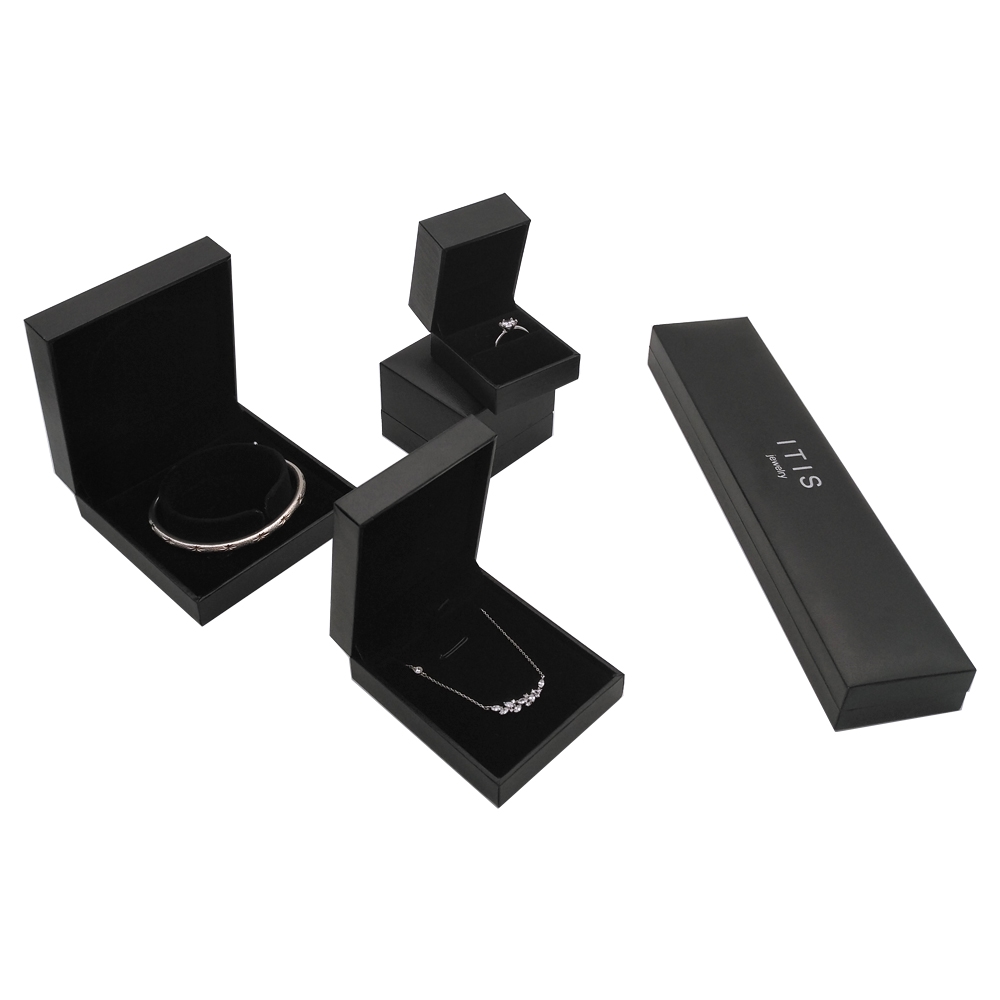
The base material determines the strength and durability of a bracelet box. Rigid boxes usually use greyboard, and the thickness should match the product size and packaging requirements. Thicker boards provide better support and prevent deformation, especially for luxury packaging. Brands can also choose eco-friendly materials, such as FSC-certified paper and recycled boards, to improve sustainability while maintaining box quality.
Wrapping materials influence the look, feel, and durability of bracelet boxes. Coated paper provides a smooth surface for high-quality printing, while textured papers create a premium appearance. Soft-touch finishes add a luxury feeling but may show fingerprints and scratches more easily. Selecting the right paper and protective coating helps balance visual appeal with long-term durability during storage and transportation.
MOQ (Minimum Order Quantity) directly affects your packaging budget and production planning. Custom boxes usually require upfront costs for molds, cutting tools, and printing setup. A low unit price does not always mean a lower total cost because tooling fees must also be included. To reduce inventory pressure, brands can use standard outer boxes with replaceable custom inserts or negotiate split shipments with suppliers to receive packaging in smaller batches over time.
The real cost of bracelet packaging includes more than the factory price. Box size affects shipping fees because couriers often calculate costs based on package volume. Oversized boxes increase freight expenses and require more warehouse space. Rigid boxes provide better presentation but take more storage space, while folding cartons save space but require assembly before packing. Evaluating shipping, storage, and labor costs helps brands choose a packaging solution with better overall value.
Cost Category | Rigid Setup Box Impact | Folding Carton Impact |
|---|---|---|
Tooling & Setup | High (Molds, wrapping jigs) | Low (Standard die-cutting plates) |
Inbound Freight | High (Shipping assembled volume) | Low (Shipping flat density) |
Fulfillment Labor | Low (Drop-in ready) | High (Requires manual folding) |
Outbound DIM Weight | Fixed (Cannot be compressed) | Flexible (Can be designed to ship flat) |
The optimal custom bracelet box is a calculated balance between structural protection, multifunctional display utility, unit economics, and targeted brand positioning. Packaging must protect the metal from tarnish, survive the courier network, and deliver a memorable tactile experience to the end consumer. Prioritize packaging manufacturers who provide transparent sampling processes and guarantee sulfur-free materials.
Request a structural dieline from shortlisted vendors to verify dimensions against your product and calculate outbound DIM weight.
Order a blank physical prototype for immediate fit-testing, drop-testing, and transit simulation.
Map out the total landed cost, including inbound freight, warehouse pallet storage, and fulfillment labor, before signing a purchase order.
Require a fully finished Pre-Production Sample (PPS) to lock in color, material tolerances, and hinge tension.
Draft a manufacturing contract that specifies AQL 2.5 inspection standards and sulfur-free material requirements.
A: There is no universal standard, but typical rigid bracelet boxes range from 3.5 x 3.5 x 1.5 inches for chain bracelets to 4 x 4 x 2.5 inches for rigid bangles. The exact dimensions depend entirely on the insert style, the thickness of the jewelry, and the required clearance to prevent the metal from touching the interior lid.
A: You must specify sulfur-free materials for all interior components. Standard paper, certain fabrics, and industrial glues emit sulfur gases that rapidly oxidize silver and brass. Use specialized anti-tarnish microfiber, sulfur-free velvet, and water-based adhesives. You can also include small anti-tarnish tabs within the box.
A: A rigid box is constructed from thick, non-bending greyboard wrapped in paper. It ships fully assembled, offering a premium feel but requiring significant storage space. A folding carton is made from thinner paperboard. It ships flat, saving freight and storage costs, but requires manual assembly.
A: Couriers calculate shipping costs based on the volume a package occupies, not just its physical weight. A box that is unnecessarily large will trigger higher dimensional (DIM) weight tiers. Optimizing your box size to closely fit the bracelet minimizes empty space and drastically reduces outbound shipping fees.
A: For fully custom rigid boxes manufactured overseas, standard MOQs typically start between 1,000 and 3,000 units to offset tooling and setup costs. Folding cartons often have lower MOQs, sometimes starting at 500 units. Domestic manufacturers may offer lower MOQs but usually at a higher per-unit cost.
A: A PPS is a physical prototype made using the exact materials, colors, and structural design of your final order. It allows you to test the fit of your bracelet, verify the true color under natural light, and check the hinge mechanics. It serves as your contractual standard for quality control.


