


Jewelry fulfillment presents a distinct dual challenge on the warehouse floor. Earrings remain highly susceptible to transit damage, as bent posts and crushed hoops happen easily when standard mailers pass through automated sorting machines. Yet, customers expect a highly visual, premium presentation upon unboxing. Inadequate packaging leads directly to costly returns, negative reviews, and wasted inventory. Conversely, over-engineered packaging erodes profit margins because high unit costs and inflated shipping weights destroy profitability at scale. You need a reliable framework for evaluating, designing, and sourcing custom earring packaging. This framework must balance physical protection against drop impacts, brand aesthetics that drive repeat purchases, and scalable unit economics that keep fulfillment lines moving fast. We will break down exactly how to protect delicate hardware while delivering an unboxing experience that matches your brand identity.
Format dictates function: The choice between display cards, rigid boxes, and pouches must align with the earring style (studs vs. heavy danglers) and the retail channel (e-commerce transit vs. physical storefront).
Transit security requires immobilization: Beautiful display is irrelevant if earrings dislodge during shipping; structural elements like custom die-cuts and foam inserts are mandatory for e-commerce.
Material selection impacts longevity: Utilizing non-tarnishing, acid-free materials is critical for inventory storage and preserving product quality.
Unit economics go beyond the box: Total packaging cost must account for assembly time, custom inserts, and the dimensional weight of the final shipping mailer.
Table of Contents
Earrings suffer specific damage mechanics during transit. Compression forces easily bend delicate silver or gold posts when heavier parcels stack on top of them in delivery trucks. Friction ruins polished metal finishes and scratches delicate enamel surfaces when pieces rub together. Immobilization is an absolute requirement for successful delivery. Your packaging must prevent the jewelry from shifting inside the container. Pieces cannot tangle together or scratch against themselves. A loose earring in a box often arrives damaged or broken.
You must lock the hardware in place securely. High-density foam inserts grip the metal firmly, while custom die-cut slots hold the pieces exactly where you place them. Preventing movement neutralizes the vibration and impact forces common in modern shipping networks. To achieve total immobilization on the packing line, follow these specific steps:
Anchor the primary hardware using tight-fitting rubber stoppers rather than loose metal butterfly clutches.
Seat the earring flush against the display card or insert so no gap exists for the post to bend.
Lock the display card inside a secondary sleeve or exact-fit box cavity to prevent lateral sliding.
Fill any remaining vertical void space with a soft top-pad or tissue paper to stop upward bouncing.
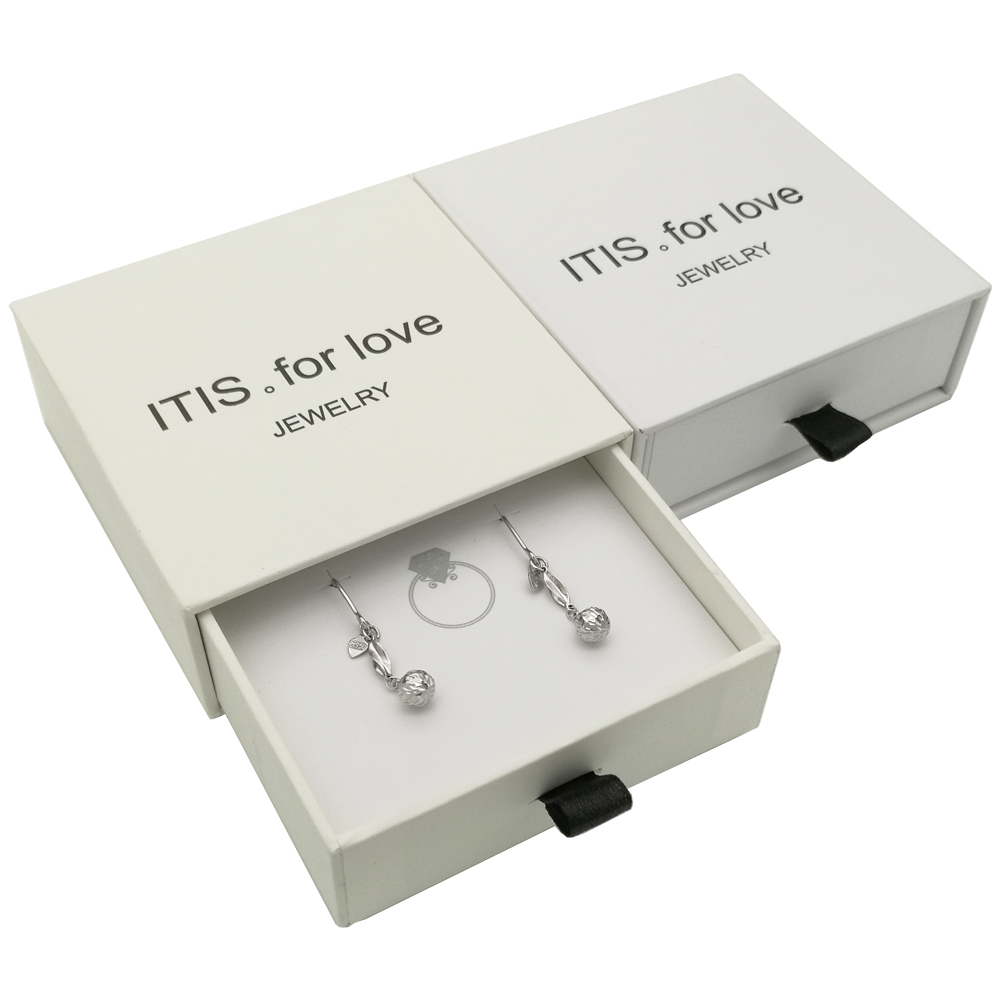
Custom packaging serves as a physical brand touchpoint that bridges the gap between digital expectation and physical reality. Tactile materials heavily influence perceived product value before the customer even sees the jewelry. Soft-touch coatings feel luxurious, modern, and sophisticated. Textured kraft paper communicates an organic, artisanal, and sustainable quality. The unboxing experience shapes first impressions instantly, and customers associate heavy, structured materials with high-end craftsmanship.
Flimsy materials instantly degrade the perceived worth of the jewelry inside. Color accuracy also plays a major role in brand consistency. Your packaging colors must match your digital presence perfectly. A well-designed unboxing sequence builds anticipation and turns a simple delivery into a memorable event. This positive experience directly drives repeat purchases and social media sharing. When a customer slides a heavy rigid box open, the friction creates a brief moment of suspense that elevates the perceived value of the earrings inside.
Labor costs for packaging assembly add up quickly on the warehouse floor. Complex multi-part boxes take significantly longer to pack and seal. Pre-punched display cards slide into mailers in seconds. You must evaluate dimensional weight implications carefully because e-commerce shipping margins shrink rapidly when boxes get too large. Bulky packaging increases postage rates unnecessarily, as carriers charge based on volume, not just actual weight.
Streamlined fulfillment requires packaging that is fast to assemble and remains compact to ship efficiently. Every extra second spent folding a complex box reduces your daily shipping capacity. Standardizing your packaging sizes simplifies your warehouse operations and allows your team to process orders faster during peak holiday seasons. If your pick-and-pack team has to fold origami-style boxes for every order, your labor costs will consume your profit margins.
Fulfillment Time and Labor Impact
Packaging Type | Average Assembly Time | Fulfillment Complexity | Storage Footprint |
|---|---|---|---|
Flat Display Card + Sleeve | 10 - 15 seconds | Low (Slide and seal) | Minimal (Ships flat) |
Folding Carton Box | 30 - 45 seconds | Medium (Requires folding) | Low (Ships flat) |
Rigid Box with Foam Insert | 15 - 20 seconds | Low (Pre-assembled) | High (Ships fully formed) |
Display cards excel in lightweight shipping scenarios. They work perfectly for physical retail environments and pegboard displays. Brands use them heavily for budget-conscious scaling because they offer a very low cost per unit. You can customize them highly with unique shapes and edge cuts. They require a minimal storage footprint in your facility, and cards fit easily into standard mailers and envelopes. Folded hang tags provide additional real estate for your operations, allowing you to print branding, care instructions, and barcodes on the back.
However, cards offer zero crush protection on their own. You must use a secondary rigid mailer. E-commerce shipping requires an outer box to prevent bent posts and crushed hardware. If you ship a display card inside a standard paper envelope, the sorting machines at the postal facility will flatten the earring posts against the card, resulting in a total loss of the product.
Rigid boxes suit high-value, fine jewelry perfectly. They protect delicate statement pieces during rough transit. These containers utilize thick chipboard wrapped in premium paper, delivering maximum crush resistance against heavy parcels. Customers enjoy a premium unboxing feel every time, and the built-in presentation elevates the product immediately upon opening. The structural integrity of a 1200gsm chipboard box ensures that even if a heavier package falls on it, the earrings inside remain untouched.
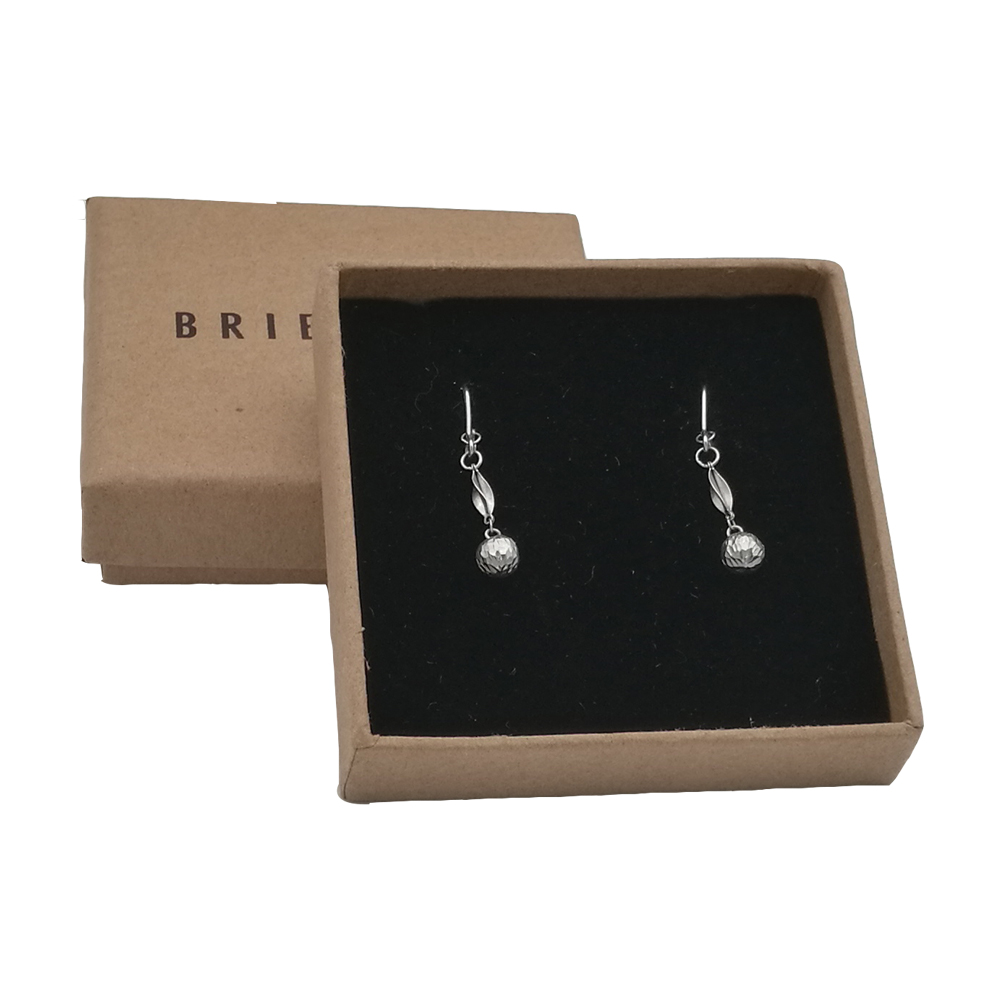
Manufacturers require higher Minimum Order Quantities for these items. Rigid boxes increase your overall shipping weight and dimensional footprint. You need specific foam or velvet inserts inside the box. Inserts are strictly necessary to prevent internal rattling. Without a proper insert, the earring will bounce against the hard interior walls, which can chip enamel or scratch polished gold surfaces.
Pouches work well for soft branding approaches. They protect durable metal hoops effectively against surface scratches. Many brands use them as a secondary layer over a display card. Customers often reuse pouches for travel and storage, which extends your brand visibility long after the initial purchase. They add very low shipping weight to the final order, and drawstring closures keep the items contained securely.
Pouches provide zero structural protection against compression. Heavy boxes will crush earrings stored only in a pouch. Earring posts can easily poke through the fabric, damaging both the pouch and the jewelry hardware. You must secure the jewelry on a sturdy card first before inserting it into any soft bag. Relying solely on a velvet pouch for a pair of delicate stud earrings is a guaranteed way to generate customer returns.

Cardstock weight determines the structural integrity of your display. Anything under 300gsm is simply too flimsy for metal earrings. Thin paper bends under the weight of the jewelry, sags on retail displays, and warps inside shipping mailers. We recommend 350gsm to 400gsm for premium rigidity. Heavy cardstock prevents tearing around the punch holes when customers remove the jewelry.
Finish selection also matters greatly for durability. Uncoated kraft paper looks eco-friendly and rustic but absorbs moisture easily. Matte or soft-touch finishes feel modern and highly premium but can show fingerprints if handled with oily hands. Glossy coatings offer superior durability and vibrant color reproduction, resisting fingerprints and minor moisture exposure. Always test the paper grain direction before ordering. The grain should run vertically to provide maximum stiffness and prevent the card from bowing forward under the weight of heavy chandelier earrings.
Cardstock Weight Guidelines
Paper Weight (GSM) | Rigidity Level | Best Suited For |
|---|---|---|
250gsm - 300gsm | Low | Lightweight plastic or resin studs |
350gsm - 400gsm | Medium-High | Standard metal hoops and dangles |
450gsm+ (Duplexed) | Maximum | Heavy statement pieces, premium unboxing |
Layout frameworks must match the specific earring type perfectly. Precision die-lines ensure your jewelry hangs perfectly straight every time. If the holes sit too low, the card will flip forward. If they sit too high, the earrings will obscure your printed logo. Consider these specific layout strategies based on your inventory:
Studs: Place standard 1/16-inch punch holes centered in the upper third of the card. Prototyping tip: Use a sharp pushpin to test layouts for ultra-thin posts before committing to a commercial die-cut.
Hoops: Design side-slits or fold-over tabs. These accommodate curved hardware without forcing the metal to bend unnaturally against flat paper.
Danglers and Chandeliers: Use higher hole placement and extend the overall card length significantly. This prevents the jewelry from hanging off the bottom edge and getting crushed at the bottom of the box.
DIY prototyping helps test layouts quickly and cheaply. You can use free SVG templates and desktop craft cutters to verify hole placement with actual inventory. This allows you to adjust millimeter distances before spending money on custom tooling. However, professional die-cutting becomes necessary for scale. Commercial machines provide clean edges without frayed paper fibers and handle high volume with perfect consistency.
Designing multi-use cards saves money and storage space. Create layouts that accommodate both earrings and enamel pins by adding extra holes to hold different sizes of hoops. This strategy consolidates your packaging SKUs efficiently, allowing you to reach professional minimum order quantities much faster. Managing one versatile card design simplifies your entire inventory system and reduces the chance of warehouse staff picking the wrong packaging for an order.
You must secure earring backs tightly against the display card. Standard butterfly clutches often vibrate loose during shipping. Rubber stoppers grip posts much better, and the tight friction prevents the jewelry from sliding forward. Use clear adhesive sleeves to lock the card completely. Custom-fit box inserts also hold the display card firmly in place.
The card should never shift within the outer packaging. If you shake the sealed package, you should hear absolutely nothing. Movement equals damage in the logistics network. Consider using small adhesive dots on the back of the card to secure the hardware flat against the paper. This prevents the posts from puncturing the outer envelope or scratching against the interior walls of the mailer box.

Transitioning inventory directly from physical displays causes major headaches. Moving items from craft fairs or retail storefronts into shipping containers takes time. Repackaging items slows down your fulfillment speed drastically. We recommend modular custom earring packaging systems where the retail display card slides seamlessly into a box.
Use an exact-match shipping box to avoid repackaging. The outer dimensions of the card must match the inner dimensions of the box. This creates a friction-fit that requires no extra padding. This pivot saves immense labor during busy fulfillment periods. You simply take the card off the pegboard, slide it into the mailer, and apply the shipping label. No bubble wrap or tissue paper stuffing is required when the tolerances are engineered correctly.
Oxidation destroys silver and brass jewelry during storage. Transit through humid climates accelerates this chemical tarnishing process. Include anti-tarnish tabs inside every sealed package. These small paper squares absorb reactive gases in the air before they can interact with the metal. Silica gel packets absorb excess moisture effectively during ocean freight or humid summer deliveries.
Always specify the use of acid-free paper stocks. Acidic paper reacts with metals and ruins polished finishes over time. Avoid cheap cardboard that contains high sulfur levels, as sulfur causes rapid blackening on sterling silver. Seal your display cards inside airtight glassine or cello bags to create a micro-environment that blocks out external humidity entirely.
Your outer packaging must match the internal protection level. Corrugated mailer boxes offer high protection but carry a higher cost. They feature strong crush-resistant edges and high Edge Crush Test (ECT) ratings. Rigid mailer envelopes provide a lower cost alternative. They are adequate for flat cards and sturdy studs, preventing bending but offering less impact protection than corrugated board.
Bubble mailers represent the lowest cost option, but they carry the highest risk of crushed posts. Sorting machines easily compress bubble mailers flat. Avoid bubble mailers for delicate jewelry whenever possible. Match the structural strength of the outer mailer to the fragility of the specific earring. A heavy brass hoop might survive in a bubble mailer, but a delicate 14k gold post requires a rigid corrugated box.
Custom printing and die-cutting drastically alter MOQs. Buying blank cards might require only 50 units. Adding custom branding often pushes the minimum to 500 or more because factories need volume to justify setting up the printing press and calibrating the die-strike machines. Digital printing offers lower minimums than traditional offset printing, but it restricts your finish options and color matching capabilities.
Plan your inventory needs accordingly before ordering. Group different designs together to hit volume tiers. Negotiate with suppliers to split a large run across multiple artwork files. This allows you to test different colors or seasonal designs without buying thousands of identical units. Always ask your manufacturer about their specific volume price breaks, as ordering 1,000 units is often cheaper overall than ordering 750 units.
Special finishes make your packaging stand out beautifully, but they introduce significant hidden setup fees. Foil stamping requires custom metal plates, usually made of copper or magnesium. Each color of foil requires a separate plate. Embossing also demands specialized metal tooling to press the paper into a 3D shape.
Custom die-cut molds add an upfront charge to your first order. Factor these one-time fees into your initial budget. Ask your supplier to itemize all setup charges clearly on the invoice. Keep your die-lines simple to avoid complex tooling costs. Reusing the same physical shape for future orders saves money because you only pay the die-cut mold fee once if the outer shape and hole placements remain identical.
Many brands claim eco-friendly packaging falsely. Mixed materials render the packaging completely non-recyclable. Paper cards with plastic lamination end up in landfills because recycling facilities cannot separate the plastic film from the paper fibers. Foam inserts glued to cardboard cannot be recycled either and must be thrown in the trash.
Choose genuine alternatives for sustainable fulfillment. Molded pulp inserts offer great protection and full compostability. Consider using 100% recycled cotton cards for a premium, green option. Glassine bags provide a translucent, recyclable alternative to plastic cello sleeves. Verify the certifications of your paper suppliers and look for verified sustainable forestry credentials to back up your marketing claims with actual supply chain transparency.
Audit your current damage rates and identify which specific earring styles suffer the most bent posts or crushed hardware during transit.
Order blank sample packs from manufacturers to test cardstock rigidity and verify that your jewelry fits the pre-punched hole layouts.
Conduct a physical drop-test by packing your actual inventory, sealing the mailer, and dropping it from a height of three feet onto a hard floor.
Calculate the final dimensional shipping weights of your fully assembled packages to ensure the new materials do not push you into a higher postage tier.
With 20 years of experience in personalized jewelry packaging, Shenzhen ITIS Packaging Products Co., Ltd. provides one-stop support from packaging design and sampling to production and delivery. Based in Shenzhen, the company combines an experienced design team with large-scale manufacturing capabilities to develop custom packaging solutions for earrings, rings, necklaces, bracelets, and other jewelry products.
A: The best material is heavy cardstock ranging from 350gsm to 400gsm. This thickness prevents bending and tearing under the weight of the jewelry. It is absolutely critical to use acid-free materials. Acidic paper reacts with metals, causing rapid tarnishing and discoloration on silver and brass pieces.
A: Use tight rubber earring backs instead of standard butterfly clutches to grip the posts securely. Slide the card into a custom-fit cello or glassine sleeve. Finally, use an exact-match outer box. This eliminates internal friction and prevents the card from shifting during transit.
A: Standard dimensions vary by earring style. Use 2x2 inches for small studs. Use 2x3.5 inches for standard dangles. Design custom widths for large hoops. Consider creating slightly larger multi-use cards with extra holes to accommodate different inventory types and reduce your packaging variations.
A: High-density EVA foam provides superior structural security for transit. It grips the jewelry tightly and absorbs impact. Velvet-flocked inserts offer a much more premium aesthetic presentation for fine jewelry. Many premium boxes combine both, using a foam core topped with a velvet surface layer.
A: Replace plastic cello sleeves with translucent glassine bags. Swap synthetic foam inserts for corrugated cardboard layers or molded pulp. Use unlaminated kraft paper cards instead of glossy coated stocks. Secure the outer mailer with water-activated paper tape rather than standard plastic packing tape.


