


The unboxing experience is the first physical interaction a customer has with a jewelry brand, serving as a direct proxy for the product's perceived value and quality. Brands struggle to balance premium aesthetics with unit economics, structural integrity, and fulfillment efficiency. Poor packaging choices lead to tarnished jewelry, high shipping costs, and damaged brand reputation. This guide provides a technical framework for specifying custom jewelry boxes, breaking down the exact materials, structural styles, inserts, and finishes required to align packaging with brand positioning and operational realities. We will examine how substrate compatibility impacts high-end finishes and why prototyping mitigates risk before mass production. You need packaging that protects delicate metals while delivering a flawless presentation on the retail floor or upon delivery.
Structure Dictates Logistics: Box style (e.g., rigid vs. collapsible) directly impacts warehousing footprint, fulfillment speed, and dimensional shipping weight.
Insert Chemistry Matters: Selecting the wrong insert material can cause chemical reactions (tarnishing) with precious metals; material density must match the jewelry's weight.
Substrate Compatibility is Critical: High-end finishes like hot foil stamping or spot UV require specific exterior wrap textures and core board densities to execute cleanly.
Prototyping Mitigates Risk: Moving to mass production without a physical, fully finished prototype increases the risk of structural failure, glue seepage, or misaligned inserts.
Table of Contents
Selecting a box structure requires balancing the desired unboxing presentation with the realities of storage space, labor costs during assembly, and shipping weight. You must evaluate how your fulfillment team handles the packaging on the warehouse floor. A box that looks great but takes five minutes to assemble will destroy your operational efficiency during peak seasons.
You construct these boxes with a separate top lid and bottom base. Manufacturers build them from heavy greyboard ranging from 800gsm to 1500gsm. These structures are ideal for high-end, luxury presentation. They offer structural rigidity, premium weight, and a slow-opening vacuum-release effect. The friction fit between the lid and base creates a moment of anticipation for the customer. However, they require significant warehousing space. You cannot ship or store them flat, which drives up inbound logistics costs. When planning for Q4 volume, you must calculate the exact pallet dimensions to ensure you have enough racking space.
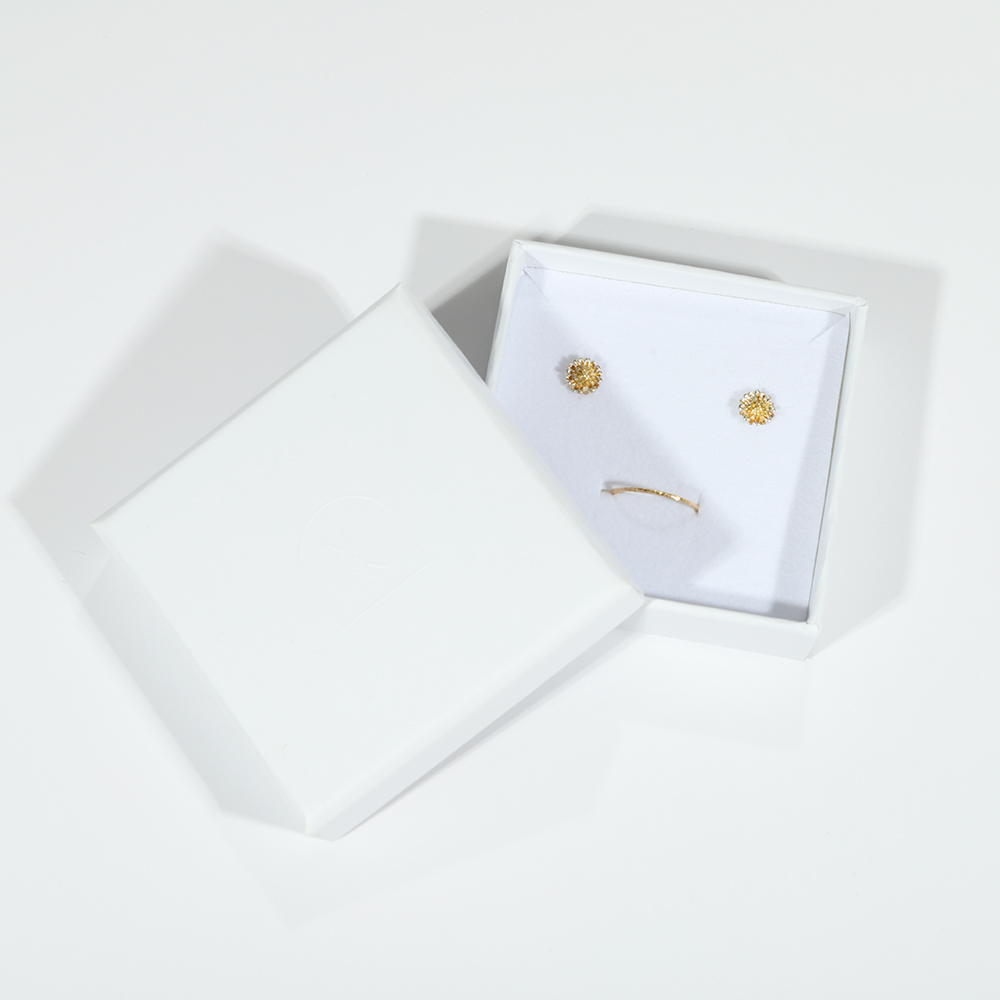
This style features an outer sleeve with an inner tray that slides out. You can add pull options like ribbon loops, grosgrain tabs, thumb-notches, or metal rings. They work excellently for stackability and multi-layered product collections. They create a sequential, reveal-style unboxing experience. You must maintain exact friction tolerances during manufacturing. If the fit is too tight, the box tears when the customer pulls the tab. If it is too loose, the inner tray falls out during handling, potentially damaging the jewelry inside. We recommend specifying a 1mm to 1.5mm clearance depending on the thickness of the exterior wrap.

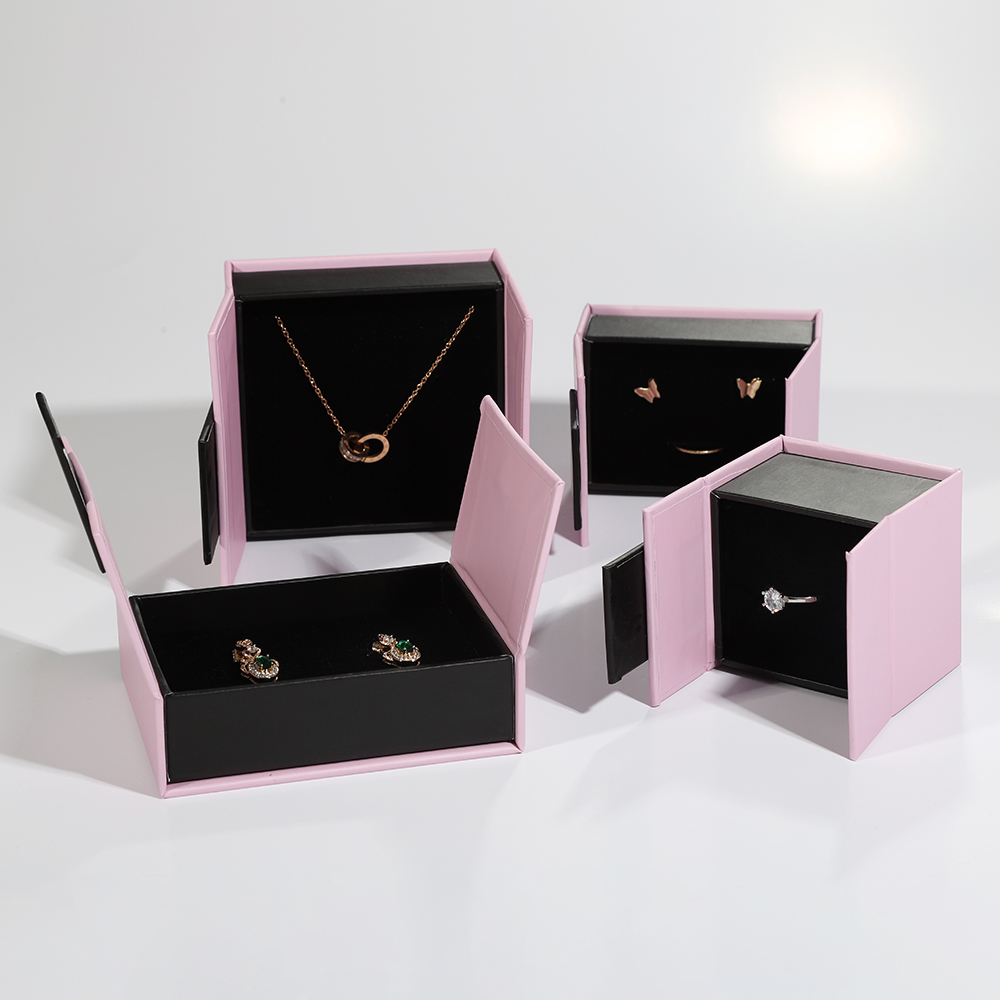
These boxes use a hinged lid with embedded neodymium magnets in the flap. This creates a seamless, audible snap closure. They provide a premium feel and are highly reusable. Consumers often keep them for secondary storage, which extends your brand's lifecycle in their homes. They suit heavy or complete jewelry sets well. You must calibrate magnet strength and polarity to the lid's weight and the exterior wrap paper's thickness. Poor calibration causes weak seals, leading to boxes popping open during transit. Always test the closure strength with the actual jewelry weight inside the box.
Manufacturers build these from rigid boards with V-groove cuts and double-sided adhesive corners. They ship flat and assemble on-demand. This is the optimal solution for brands with limited storage space. You maintain a rigid-box feel without paying premium storage rates. The trade-off is a significant increase in fulfillment time. Manual assembly per order drives up labor costs. Your packing team must peel the adhesive strips and align the corners perfectly under time pressure. If the adhesive is low quality, the box walls will warp or detach in humid climates.
This classic design uses a metal or hard plastic-hinged spring-loaded frame. You wrap the frame in fabric, leatherette, or paper. Traditional jewelry categories like engagement rings and bridal sets use these frequently. They deliver a dramatic "pop-up" display presentation. Implementation risks include higher tooling costs. The rigid shape profiles cannot easily change without new injection molds. The spring mechanism must be tested for thousands of cycles to ensure it does not snap or lose tension over time.
This hybrid approach houses a protective velvet, microfiber, or suede envelope pouch inside a slim slide drawer or rigid box. It works perfectly for modern, minimal jewelry lines. The pouch acts as a travel-friendly secondary storage solution for the customer. You must coordinate two distinct manufacturing runs. Sewing textile pouches and manufacturing rigid boxes require different production timelines. Color matching between the dyed fabric pouch and the printed paper box requires physical drawdowns and careful lighting evaluation.
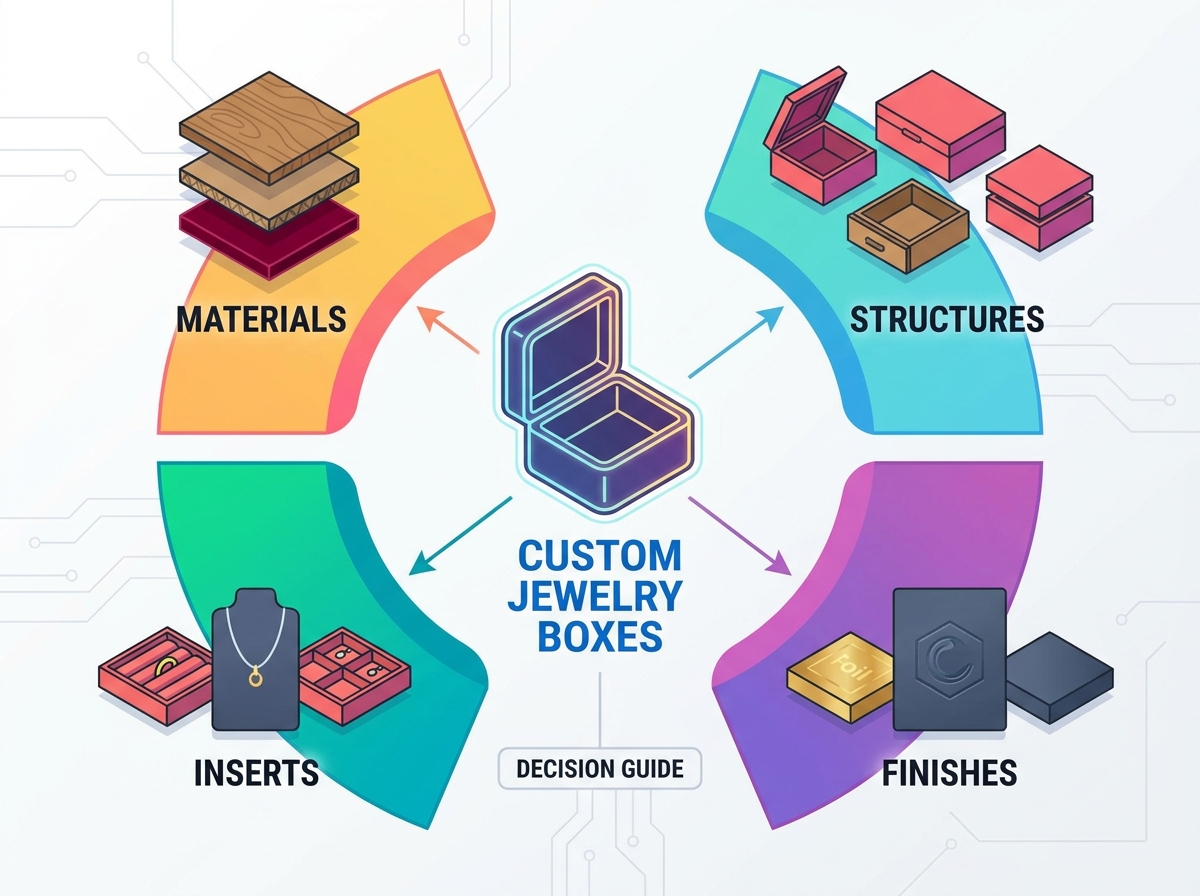
The core material provides structural integrity and weight. The exterior wrap dictates the tactile experience, durability, and printing capabilities. You must match these components to your specific brand requirements and shipping realities.
Greyboard, or rigid paperboard, remains the industry standard. Thickness typically ranges from 800gsm to 1200gsm. It balances cost, rigidity, and eco-friendliness effectively. Medium-Density Fibreboard (MDF) and solid wood serve ultra-luxury markets. Brands use them for high-end watches or heirloom jewelry. They offer high perceived value but carry significantly higher unit costs and shipping weights. Plastic and metal cores include injection-molded plastics or lightweight tinplate. They work best for mass-market velvet-wrapped ring boxes or vintage-themed collectible tins. When selecting greyboard, ensure it is made from recycled content to meet modern sustainability standards without sacrificing structural strength.
Core Material | Typical Thickness / Density | Best Use Case | Key Drawback |
|---|---|---|---|
Greyboard (Paperboard) | 800gsm - 1500gsm | Standard luxury, e-commerce | Vulnerable to moisture damage |
MDF / Solid Wood | 3mm - 10mm | Ultra-luxury, heirloom pieces | High shipping weight |
Injection-Molded Plastic | Variable | Classic clamshell ring boxes | High initial tooling investment |
Tinplate / Aluminum | 0.23mm - 0.30mm | Vintage themes, collectibles | Prone to denting during transit |
Coated art paper is best for vibrant, high-fidelity, full-color printing (CMYK) and complex graphic designs. Uncoated or specialty textured paper provides a tactile, premium feel without the cost of fabric. It mimics linen, stone, or leather grains. PU leatherette and velvet wraps deliver a traditional luxury aesthetic. They are highly durable and stain-resistant compared to paper. Lamination profiles protect printed wraps. Matte offers a soft feel. Gloss makes colors pop. Anti-scratch lamination is essential for dark-colored packaging prone to scuffing. You must assess the trade-off between the tactile feel of uncoated wraps and their susceptibility to scuffing, fingerprint oils, and tearing during transit. Uncoated black paper, for example, will show every scratch and fingerprint if not handled with cotton gloves during fulfillment.
The insert must physically secure the piece to prevent transit damage. It must present the jewelry at the optimal angle. Crucially, it must be chemically inert to prevent damage to delicate metals. A poorly designed insert will result in tangled chains and scratched pendants.
EVA foam offers high density and rigidity. It holds sharp die-cuts perfectly. You should use it for heavy pieces, structural alignment, or multi-item layouts. PU sponge is softer, lower density, and highly compressible. It works ideally for lightweight, delicate items like fine chains or thin rings. You must compare cost, tooling requirements, and the premium feel of each foam type before deciding. EVA foam can sometimes emit a strong chemical odor if not properly off-gassed at the factory, so you must specify a ventilation period before the boxes are packed into master cartons.
Manufacturers apply velvet, suede, and microfiber linings over foam, plastic, or cardboard cores. This provides a soft, luxurious resting surface. You face a critical implementation risk here. You must verify that the fabric and the adhesives used are completely sulfur-free. Sulfur causes accelerated oxidation and tarnishing of silver and gold jewelry. Request material safety data sheets (MSDS) from your supplier to confirm the absence of tarnish-accelerating chemicals.
Sustainable brands are shifting toward die-cut cardboard inserts and organic cotton pads. This trade-off results in a lower perceived luxury compared to velvet-lined EVA. However, it aligns perfectly with strict environmental compliance and ESG goals. When using cardboard inserts, you must engineer the folds and tabs precisely to hold the jewelry without requiring plastic zip ties or elastic bands.
Different jewelry pieces require specific engineering to remain secure during rough shipping.
Rings: Direct die-cut vertical or horizontal slits, or H-slots with plush compression zones to hold bands upright.
Earrings: Pierced needle holes, flap slits, or T-cuts engineered to hold stud posts or dangling hooks securely.
Necklaces & Pendants: Top-angle notch-cuts, elastic retaining bands on the reverse side, or hidden rear compartments to house excess chain length.
Bracelets & Watches: Plush pillows or flexible C-bands that hold items in an open, curved position.
Finishes elevate the box from generic packaging to a proprietary brand asset. They require precise manufacturing tolerances to execute correctly. Misaligned finishes look cheap and damage your brand perception.
This mechanism applies metallic foil via heat and pressure using a custom brass or magnesium die. It works best for crisp logos on dark, matte, or textured backgrounds. Fine, intricate logo details carry risk. They may fill in or bleed if the foil stamp is too small or the paper texture is too deep. Always review a physical strike-off before approving a full production run.
This process alters the surface of the paper to create a raised (emboss) or sunken (deboss) 3D effect. It provides a minimalist, tactile branding approach. You can combine it with foil for maximum visual impact. Ensure your core board is thick enough to handle the pressure of debossing without cracking the interior liner.
Spot UV adds a high-gloss liquid finish to specific areas. Soft-touch adds a velvety, matte film over the entire box. Soft-touch coatings attract fingerprints and dust easily. You must evaluate this against your target demographic's expectations. If you use spot UV, ensure the registration aligns perfectly with the printed artwork beneath it.
Choosing the right custom jewelry box requires balancing structural design, premium materials, protective inserts, and refined finishing techniques. A well-designed jewelry box not only safeguards valuable products during storage and transportation but also creates a memorable unboxing experience that strengthens brand recognition and customer loyalty.
Working with a trusted packaging manufacturer is essential to achieving consistent quality and premium presentation. Shenzhen ITIS specializes in custom jewelry boxes and luxury jewelry packaging for global brands, offering innovative structural designs, premium materials, sustainable packaging solutions, and flexible OEM/ODM manufacturing services. Backed by advanced production technology, rigorous quality control, and extensive customization experience, Shenzhen ITIS helps customers create packaging solutions that combine product protection, elegant presentation, and long-term brand value.
Select box structures that balance presentation, shipping efficiency, and storage requirements.
Use premium, sulfur-free insert materials to protect jewelry and prevent tarnishing.
Match finishing techniques with your brand identity to create a distinctive luxury experience.
Partner with experienced manufacturers that provide professional engineering, customization, and reliable quality assurance.
Before selecting a custom jewelry box manufacturer, evaluate their design capabilities, material expertise, manufacturing capacity, quality control standards, and OEM/ODM experience to ensure packaging that enhances both product protection and brand value.
A: Greyboard ranging from 1000gsm to 1200gsm is optimal. It provides excellent structural rigidity to protect the jewelry while keeping dimensional shipping weights manageable compared to wood or MDF.
A: Tarnishing occurs when insert fabrics, foams, or glues contain sulfur compounds. You must specify sulfur-free materials and adhesives during the manufacturing process to prevent chemical reactions with precious metals.
A: Yes, but you must use thicker foil and higher stamping pressure. Avoid highly intricate or small logo details, as the foil can bleed or fail to adhere properly in the deep grooves of textured paper.
A: Collapsible boxes require manual assembly for each order, which adds seconds or minutes to the packing process. While they save warehouse space, they increase labor costs on the fulfillment floor.
A: EVA foam is dense, rigid, and holds precise die-cuts well, making it ideal for heavy items. PU sponge is soft, highly compressible, and better suited for delicate pieces like fine chains that require gentle cushioning.
A: You must engineer the correct friction tolerance between the inner tray and outer sleeve. Specify a 1mm to 1.5mm clearance and use reinforced thumb-notches or ribbon pulls to distribute the pulling force evenly.


