


The retail landscape relies heavily on the unboxing experience as the primary physical touchpoint between a jewelry brand and its customer. As digital storefronts dominate, the moment a buyer opens a package carries the weight of the entire brand narrative. Brands face a strict tension: maintaining a premium, luxury perception while adapting to tightening global sustainability regulations, rising material costs, and shifting consumer expectations. Adopting the right mix of materials, color palettes, and structural designs will future-proof supply chains, ensure compliance, and drive repeat purchases. Understanding the jewelry packaging trends 2027 allows companies to navigate these operational hurdles. This analysis breaks down the top 10 trends defining successful jewelry packaging strategies, focusing on verifiable sustainability, tactile aesthetics, and structural engineering.
Sustainability is a Baseline, Not a Feature: By 2027, regulatory compliance (like Extended Payment Responsibility) makes FSC-certified, PCR (Post-Consumer Recycled), and biodegradable materials mandatory for scale.
Tactile Minimalism Dominates: Visual noise is being replaced by monochromatic palettes, Maillard earth tones, and ultra-matte finishes that use texture to convey luxury.
Structural Retention: Drawer-style and magnetic closure boxes are evolving into multi-use keepsakes, increasing brand visibility long after the initial purchase.
Tech-Enabled Authentication: NFC chips and smart tags are becoming standard in high-end jewelry packaging to verify authenticity, track provenance, and deliver digital brand experiences.
Table of Contents
Defining successful packaging requires balancing multiple operational factors. Structural integrity during transit is paramount to protect high-value items from impact and compression forces. Reducing unboxing friction ensures a seamless customer experience, eliminating the need for scissors or excessive force. Environmental compliance is mandatory, and the aesthetic alignment with the jewelry must reinforce the brand's luxury positioning. Packaging engineers must evaluate drop-test performance, humidity resistance, and material off-gassing to prevent tarnishing of precious metals.
When designing for 2027, teams must look at the entire lifecycle of the box. This means evaluating how the materials behave in different climate zones during shipping. A box that looks pristine in a dry warehouse might warp or delaminate in high-humidity transit environments. Selecting adhesives that withstand temperature fluctuations without losing their bond strength is a primary engineering focus. The success criteria extend beyond aesthetics to include measurable performance metrics like dimensional stability and crush resistance.
Upcoming global packaging waste directives are reshaping material sourcing. Extended Producer Responsibility (EPR) laws hold brands accountable for the end-of-life impact of their packaging. This regulatory environment forces a shift away from single-use plastics and non-recyclable composites toward verifiable, sustainable alternatives. Companies must track the chain of custody for all paper products, ensuring they meet strict forestry standards. Failure to comply results in heavy fines and restricted market access.
Auditing supply chains for compliance involves rigorous documentation. Suppliers must provide certificates of analysis for all inks, adhesives, and substrates. The transition to mono-material designs simplifies the recycling process, allowing consumers to dispose of the packaging without separating different components. This approach not only meets regulatory demands but also aligns with consumer expectations for straightforward, responsible waste management.
Premium packaging directly correlates with lower return rates and higher Customer Lifetime Value (CLV). A memorable unboxing experience fosters emotional connection, encouraging social sharing and repeat purchases. Investing in high-quality packaging acts as a strategic customer retention tool rather than merely a logistical expense. The tactile feedback of a well-engineered box communicates value before the customer even sees the jewelry.
Analyzing the return on investment for packaging upgrades requires tracking customer feedback and unboxing videos. Brands that invest in custom inserts and high-quality exterior finishes often see a reduction in transit damage claims. The initial cost of developing custom molds or sourcing premium materials is offset by the long-term benefits of brand loyalty and reduced product replacement costs.
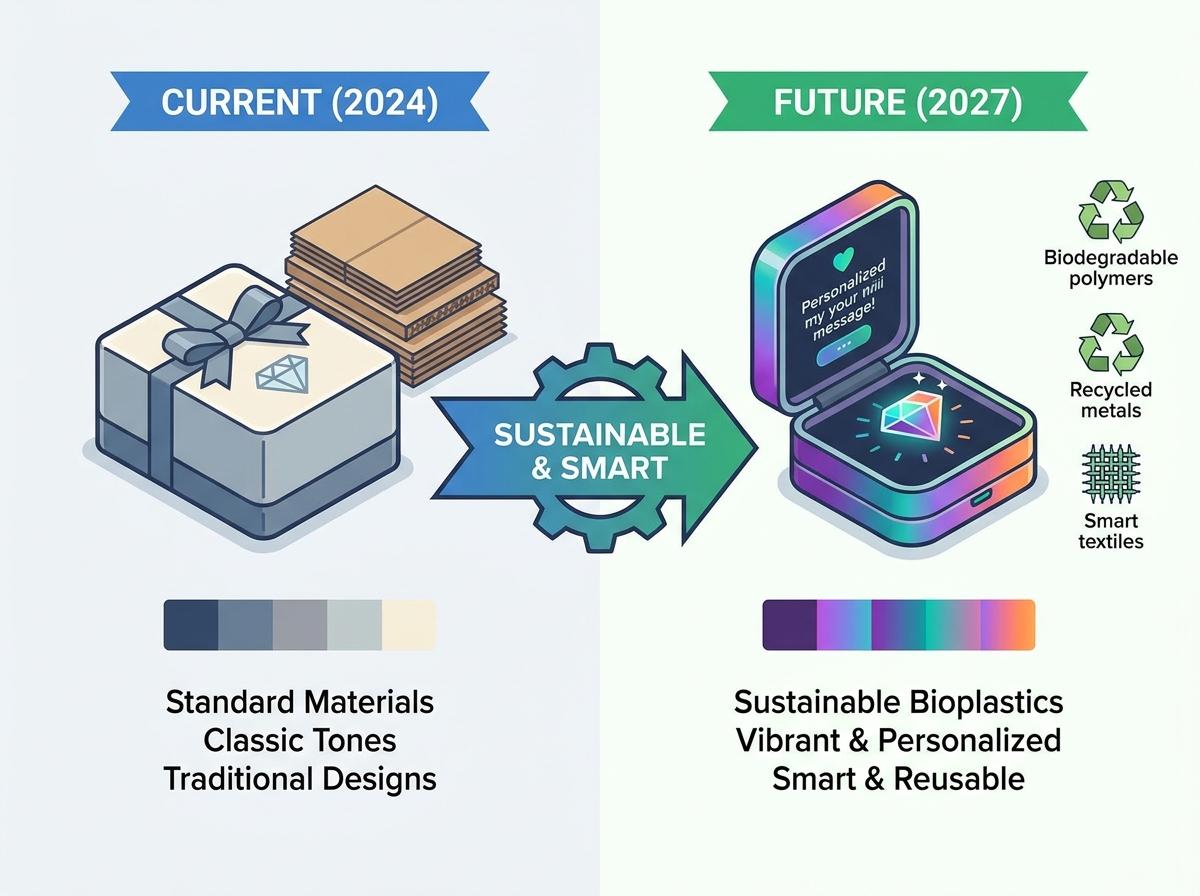
Replacing traditional EVA foam and velvet with lab-grown mycelium, molded pulp, and algae-based foams addresses the demand for sustainable interiors. Crafting bespoke, die-cut geometric cavities specifically engineered to secure high-value rings, delicate chains, and heavy earrings during transit eliminates the need for plastic zip ties or single-use adhesive tabs. When evaluating these options, assess the shock-absorption capabilities and off-gassing risks of organic inserts against traditional synthetic foams.
Mycelium packaging offers unique advantages in terms of custom moldability. The material grows to fill the exact shape of the mold, creating a precise fit for complex jewelry pieces. This biological manufacturing process requires specific environmental controls to ensure consistent density and structural integrity. Engineers must test the moisture content of the final product to prevent mold growth during long-term storage.
Molded pulp has evolved beyond basic egg-carton textures. High-pressure thermoforming techniques produce smooth, refined surfaces suitable for luxury applications. These inserts can be color-matched using natural dyes, providing a cohesive aesthetic without compromising recyclability. The transition to these materials requires close collaboration with suppliers to establish acceptable tolerances for shrinkage and warping.
Utilizing high-grade recycled acrylics and reclaimed metals for rigid box exteriors and hardware offers a compelling eco-friendly narrative. Brands must balance this narrative with the higher unit cost and potential supply chain bottlenecks associated with certified PCR materials. Securing reliable suppliers is necessary for maintaining production schedules. The mechanical properties of recycled plastics can vary, requiring adjustments to injection molding parameters.
Reclaimed metals used for hinges, clasps, and logo plaques require rigorous sorting and refining to achieve a consistent finish. Variations in the alloy composition can affect the plating process, leading to color inconsistencies. Quality control teams must implement strict visual inspection protocols to identify and reject hardware that does not meet the brand's aesthetic standards.
Material Comparison for 2027 | |||
Material Type | Primary Application | Durability | End-of-Life |
|---|---|---|---|
Mycelium | Interior Inserts | Moderate | Compostable |
Thermoformed Pulp | Interior Inserts | High | Recyclable |
PCR Acrylic | Rigid Outer Box | Very High | Recyclable |
Reclaimed Brass | Hardware/Hinges | Extreme | Recyclable |
Transitioning to heavy-weight, uncoated, FSC-certified papers printed with soy or algae-based inks provides a tactile, sustainable exterior. The primary implementation risk involves addressing the durability of uncoated papers against scuffing and moisture during global freight shipping. Protective outer sleeves or strategic structural design can mitigate these risks. Paper weight, measured in GSM (grams per square meter), dictates the structural rigidity of the final box.
Plant-based inks behave differently than traditional petroleum-based inks on the press. They often require longer drying times and specific coating applications to prevent smudging. Printers must adjust their color management profiles to account for the natural absorption rates of uncoated papers. Achieving deep, saturated colors requires multiple passes and precise registration control.
The shift toward warm, sophisticated neutrals like caramel, taupe, and deep brown, alongside single-tone palettes, allows the jewelry to stand out. These Maillard color schemes reduce printing costs while elevating perceived brand maturity, offering a grounded, luxurious aesthetic that contrasts with stark, high-contrast designs. Achieving consistent color across different substrates requires advanced spectrophotometer matching.
When applying Maillard tones to different materials, the surface texture heavily influences the perceived color. A taupe ink printed on a smooth, coated paper will look significantly different than the same ink applied to a heavily textured, uncoated stock. Brands must establish physical color standards and acceptable delta-E tolerances for all packaging components to maintain visual consistency.
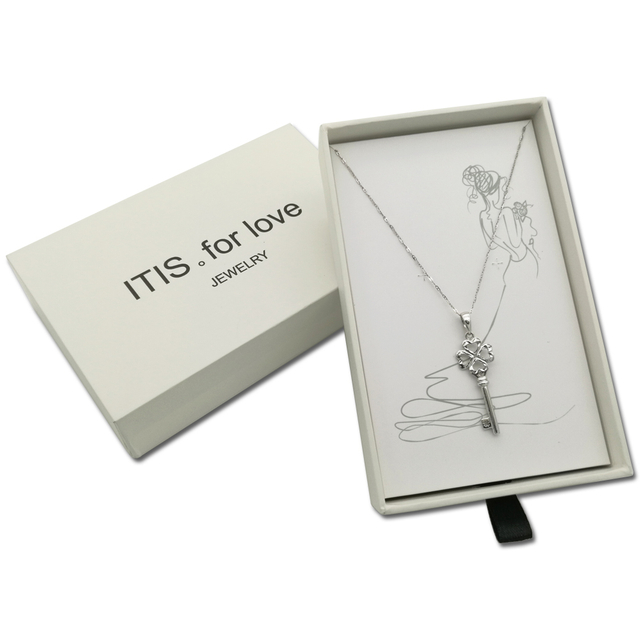
Moving away from high-gloss laminates toward soft-touch, matte finishes combined with blind debossing or subtle spot UV creates a sophisticated tactile experience. Soft-touch coatings can sometimes attract dust or fingerprints, so evaluate the necessity of anti-scuff matte laminations to maintain a pristine appearance upon delivery. The depth of a blind deboss depends on the thickness and compressibility of the paper board.
Applying spot UV over a matte finish creates a striking contrast that highlights logos or specific design elements without adding visual clutter. The registration between the printed artwork and the UV coating must be exact. Any misalignment detracts from the premium feel. Press operators must monitor the viscosity of the UV varnish to ensure a smooth, even application without bubbling or orange-peel effects.
Reducing logo size and utilizing negative space creates a quiet luxury aesthetic. Integrating abstract, culturally symbolic motifs or heritage linework on interior linings or box lids adds an emotional, exclusive layer of personalization. Minimalist designs require flawless material quality, as there are no busy patterns to hide manufacturing imperfections. Every fold, crease, and glued edge must be executed with precision.
Heritage symbolism can be incorporated through custom watermarks, subtle embossing, or specialized foil stamping. The choice of foil color—whether a muted champagne gold or a dark gunmetal—should complement the Maillard color palette. The stamping dies must be CNC-engraved to achieve crisp, sharp edges on intricate linework. Heat and pressure settings on the stamping press require constant monitoring to prevent foil flaking or fill-in.
Engineering rigid boxes with concealed magnets or ribbon-pull drawers designed specifically for secondary use, such as travel cases or vanity storage, enhances structural retention. Optimizing the opening experience through calibrated sliding resistance and acoustic feedback—like the premium click of hidden magnets or the gentle vacuum release of friction-fit lids—creates multisensory mechanics. Weigh the premium unboxing feel against the complexity of recycling mixed-material boxes.
Friction-fit tolerances must be calculated down to the millimeter. If the fit is too tight, the customer struggles to open the box; if too loose, the lid falls off during handling. Changes in ambient humidity can cause paperboard to swell or shrink, altering the friction fit. Engineers must select core boards with high dimensional stability and test the boxes in environmental chambers to ensure consistent performance across different climates.
Calculate the required magnetic pull strength based on the weight of the jewelry and the box lid.
Specify the exact placement of magnets to ensure a crisp, satisfying closure sound.
Design the drawer tracks with minimal clearance to prevent wobbling during operation.
Select ribbon materials that resist fraying and maintain their color under UV exposure.
Test the adhesive bond between the magnet housing and the paperboard to prevent detachment.

Embedding Near Field Communication (NFC) chips or dynamic QR codes beneath the packaging lining enables digital certificates of authenticity, blockchain-backed provenance tracking, and warranty registration. The primary implementation risk is the upfront cost of software infrastructure required to manage the digital experiences linked to the physical packaging. The physical placement of the NFC chip must not interfere with the structural integrity of the box.
Shielding materials may be required if the packaging includes metallic elements that could disrupt the NFC signal. The read range of the chip must be tested through the various layers of paperboard and fabric lining. Brands must ensure the digital landing pages are optimized for mobile devices and provide a seamless user experience that matches the quality of the physical packaging.
Designing packaging with removable inserts so the outer shell functions as a permanent, standalone jewelry organizer or travel case increases the physical footprint of the brand in the customer's home. This multi-use structure acts as a daily brand reminder, significantly enhancing brand recall and perceived value. The interior lining must be durable enough to withstand daily use without pilling or tearing.
Modular designs often incorporate adjustable compartments or stackable trays. The hinges and closures must be engineered for thousands of cycles, far exceeding the requirements of standard single-use packaging. Selecting high-quality micro-suede or anti-tarnish fabrics for the interior ensures the jewelry remains protected over time. The structural board must resist warping even when subjected to the weight of multiple jewelry pieces.
Integrating the luxury presentation box directly into a secure, discreet, tamper-evident corrugated mailer prevents transit theft and reduces excess void fill. Analyzing the reduction in dimensional weight (DIM) shipping costs versus the cost of custom-engineered mailers helps determine the financial viability of this approach. The outer shipper must withstand the rigors of the parcel delivery network without transferring impact forces to the inner presentation box.
Tamper-evident features, such as water-activated reinforced tape or specialized die-cut locking tabs, provide visual confirmation that the package has not been compromised. The exterior of the shipper should remain unbranded to deter theft, while the interior can feature custom printing to initiate the unboxing experience. Drop testing and vibration testing are mandatory to validate the protective capabilities of the complete packaging system.
Calculating how much to invest in packaging based on Average Order Value (AOV) dictates the material selection and structural complexity. Assessing Minimum Order Quantities (MOQs) for custom molds, specific Pantone dyes, and bespoke structural engineering ensures the scalability of custom designs. High-volume production runs reduce the unit cost but require significant upfront capital for tooling and inventory storage.
Evaluating variable digital printing versus traditional foil-stamping allows brands to incorporate personalized customer messaging or event-specific elements without escalating tooling costs. Balancing highly personalized, intricate packaging with the labor costs associated with fulfillment and assembly at scale requires careful workflow analysis. Time-and-motion studies on the packing line help identify bottlenecks and optimize the assembly process.
The cost of packaging must also account for inbound freight and warehouse storage. Flat-pack designs reduce shipping volumes and storage requirements but increase assembly time at the fulfillment center. Rigid setup boxes offer a premium presentation but consume significant warehouse space. Supply chain managers must analyze these trade-offs to determine the most cost-effective packaging strategy for their specific operational model.
Novel materials like mycelium or specific PCR plastics often require 12 to 16 week lead times. Accurate inventory forecasting mitigates these delays and prevents stockouts during peak selling seasons. Strategies for maintaining consistency in color matching, especially for Maillard tones, and structural integrity across different production batches rely on strict quality control protocols and regular supplier audits.
Verifying third-party certifications such as FSC, ISO, and RoHS through rigorous supplier auditing prevents greenwashing claims that could damage brand trust. Ensuring suppliers meet these standards guarantees compliance and protects the brand's reputation. Establishing secondary suppliers for critical packaging components provides a safety net against unexpected disruptions in the primary supply chain.
Quality control inspections should occur at multiple stages of production. Incoming raw materials must be tested for moisture content and dimensional accuracy. In-process checks ensure that printing registration and die-cutting tolerances remain within acceptable limits. Final random inspections (FRI) before shipment verify that the finished packaging meets all aesthetic and functional requirements.
Jewelry packaging in 2027 is no longer just about presentation—it has become a strategic tool for strengthening brand identity, improving customer experience, and meeting global sustainability expectations. By combining innovative materials, functional structures, and thoughtful design, brands can create packaging that delivers long-term value throughout the entire customer journey.
Choosing an experienced packaging manufacturer is equally important for turning these trends into high-quality products. Shenzhen ITIS specializes in custom jewelry packaging solutions, offering luxury jewelry boxes, sustainable packaging, premium finishing techniques, and OEM/ODM manufacturing services for global jewelry brands. Backed by advanced production capabilities, strict quality control, and extensive customization experience, Shenzhen ITIS helps brands create packaging that enhances both product value and customer experience.
Prioritize sustainable materials that comply with future global packaging regulations.
Invest in structural designs that improve protection, reusability, and the overall unboxing experience.
Balance premium aesthetics with manufacturing efficiency to maximize packaging ROI.
Partner with experienced manufacturers that provide flexible customization and reliable production quality.
Before selecting a jewelry packaging supplier, evaluate their design capabilities, manufacturing expertise, sustainability certifications, and OEM/ODM experience to ensure consistent product quality and long-term brand success.
A: The shift is toward FSC-certified papers, molded pulp, and mycelium inserts. Emphasizing mono-material designs ensures easy recycling and compliance with tightening global waste directives. These materials eliminate the need for complex separation processes at recycling facilities.
A: Warm, earthy tones convey a sense of grounded luxury, maturity, and approachability. This contrasts sharply with the stark black-and-white palettes of the past, offering a more sophisticated visual identity that aligns with modern minimalist trends.
A: Traditional magnetic boxes require consumers to tear out the magnet, complicating recycling. Trends for 2027 favor hidden, easily removable magnetic strips, friction-fit alternatives, or paper-based latches to solve this mixed-material challenge and improve end-of-life processing.
A: Costs vary depending on the technology used. NFC chips and smart tags add a premium, but the investment is often offset by the added value of authentication, provenance tracking, and enhanced digital customer engagement. High-volume orders significantly reduce the per-unit cost of the hardware.
A: Yes. Minimalist designs rely on flawless material quality, subtle textures, and precise structural engineering. The absence of visual noise allows the tactile experience and the jewelry itself to convey true luxury, demanding higher manufacturing standards to execute properly.


