


Jewelry packaging must protect delicate products while reflecting a brand’s quality and values. As more brands seek to reduce single-use plastics, packaging teams are exploring paper-based structures, natural textiles, and alternative protective inserts.
Choosing plastic-free jewelry packaging requires more than replacing a plastic box or pouch. Brands must review each component, including the outer shipper, box structure, insert, lining, closure, coating, ink, and adhesive. They must also check product protection, production requirements, and the disposal options available in their target markets.
This guide compares practical material alternatives and explains how to evaluate them before placing a custom packaging order.
For a project-specific solution, explore ITIS custom jewelry box packaging. Confirm the material composition and plastic-free requirements for each component before approving the final design.
Table of Contents
Plastic-free packaging generally means that the packaging components contain no plastic. However, brands should define the scope of the claim before sourcing materials. Some products use paper exteriors but still contain plastic film, synthetic fabric, foam, or plastic-based adhesives.
Plastic-free, recyclable, biodegradable, and compostable are not interchangeable terms:
Plastic-free: The specified packaging components contain no plastic, based on a clearly defined material scope.
Recyclable: The packaging can be collected and processed through an available recycling system.
Biodegradable: Materials can break down through biological processes under suitable conditions.
Compostable: Materials meet applicable composting requirements under specified conditions.
A package may meet one description without meeting the others. For example, a paper box can contain plastic lamination or a mixed-material insert. A plant-based material may also require industrial composting rather than home composting.
Before making environmental claims, request material specifications from suppliers and check the relevant disposal guidance in your target market.
Silver and some other metals can tarnish when exposed to reactive substances and unsuitable storage conditions. A plastic pouch may provide a useful barrier, so replacing it requires careful material selection.
Not every paper or recycled material has the same chemical properties. Instead of assuming that all paper is safe or harmful, ask suppliers about the material’s composition and its suitability for jewelry storage.
For silver and other tarnish-sensitive items, consider:
Anti-tarnish tissue or packaging materials designed for metal protection.
Paper inserts tested for compatibility with the jewelry.
Low-emission adhesives and finishing materials where appropriate.
Storage and shipping conditions that limit exposure to moisture and contaminants.
Ask for relevant technical data or test results. A neutral pH alone does not prove that a material will prevent tarnish over an extended period. Test the proposed packaging with representative jewelry before mass production.
Plastic foam and molded plastic trays are often used because they hold products in place and absorb impact. Paper-based alternatives need to provide comparable support through structure and fit.
Possible alternatives include die-cut paperboard, folded paper inserts, molded pulp, and suitable natural-fiber linings. The best option depends on the jewelry type, weight, surface finish, and shipping conditions.
For necklaces, use routing channels, slots, or attachment points to reduce tangling. For rings and earrings, design inserts that hold the item securely without applying excessive pressure. For polished metals and delicate stones, inspect contact surfaces for rough edges or abrasive fibers.
Plastic-free packaging does not have to look plain. Paper texture, color, precise folding, and thoughtful construction can create a distinctive presentation without relying on plastic film or clear plastic windows.
Blind embossing, debossing, paper layering, and carefully selected specialty papers can add visual and tactile interest. However, coatings and finishing materials should be checked separately because some may affect recycling or introduce plastic.

ITIS provides custom jewelry packaging options, including paper materials, printing, and surface treatments. Ask which combinations fit your design and material requirements.
A practical material review starts with the function of each packaging component. The following options can help brands compare alternatives, but suitability should be confirmed for the specific design and order.
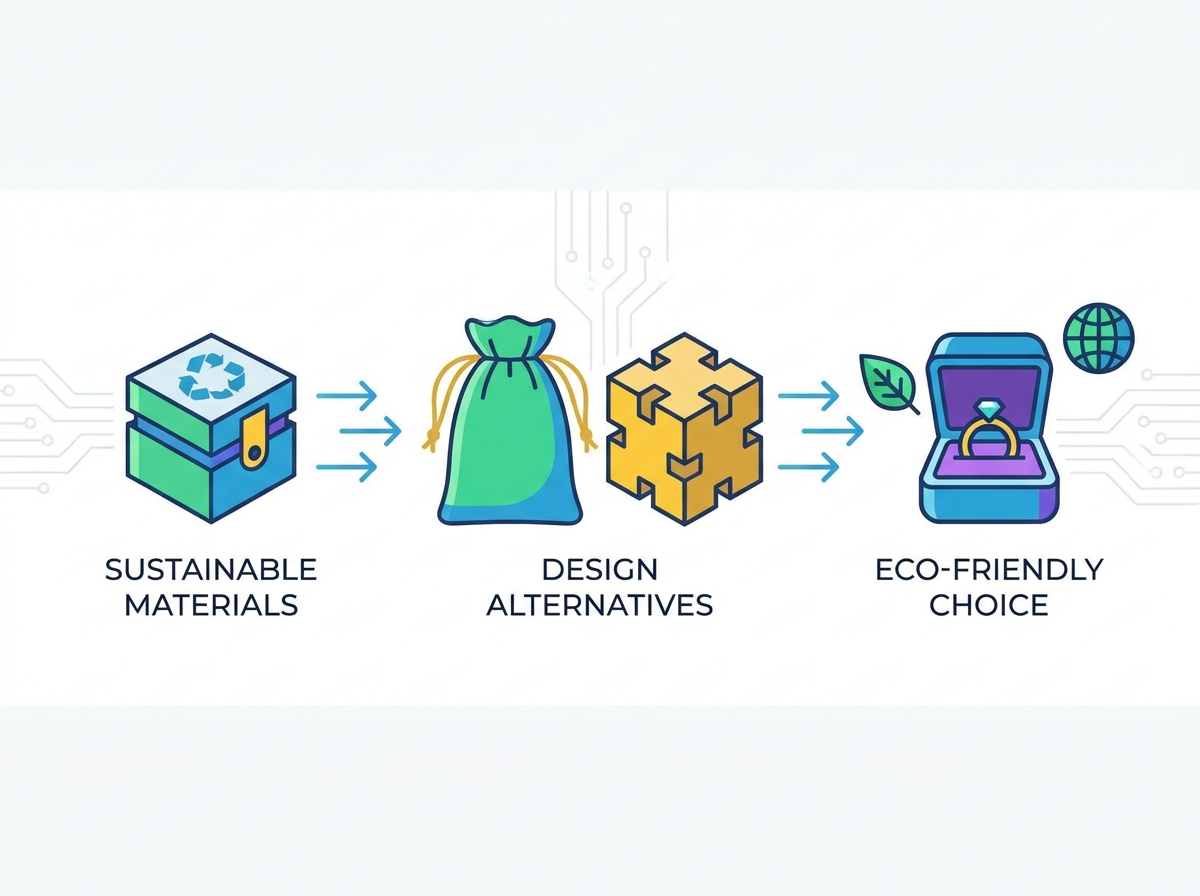
Corrugated cardboard is a common option for shipping cartons. Its performance depends on board construction, flute type, size, and the level of protection required. Paper mailers and honeycomb paper cushioning may suit lighter shipments, but they should be tested with the inner jewelry box.

When comparing shipping options, consider:
Protection against compression and impact.
Moisture exposure during transport.
Package dimensions and shipping charges.
Ease of opening and disposal.
The amount of extra material needed for protection.
Do not assume that a paper mailer is suitable for every shipment. Test the complete shipping package under conditions that reflect the intended delivery route.
Paperboard and greyboard can provide the structure for rigid jewelry boxes. Kraft paper and specialty papers can be used for wraps, sleeves, or other packaging elements, depending on the design.
The choice should account for rigidity, surface appearance, folding performance, and the product’s weight. Recycled content alone does not determine whether a board will protect a specific piece of jewelry.
For more information about paper types and their uses, see ITIS paper materials for custom jewelry boxes. Request samples to compare surface quality, folding, print results, and structural performance.
Paper-based inserts can replace some plastic or foam components. Options include die-cut paperboard, folded paper structures, and molded pulp.
Material | Potential benefits | Points to check |
|---|---|---|
Die-cut paperboard | Flexible design and relatively simple structures | Edge quality, fit, and resistance to tearing |
Folded paper inserts | Can ship flat and reduce storage space | Assembly time and consistency |
Molded pulp | Can be shaped around a product | Surface smoothness, tooling cost, and supply availability |
Natural cork | Soft, distinctive material for selected applications | Fit, durability, finish, and material composition |
Natural-fiber pouch | Soft contact surface and reusable presentation | Fiber composition, dyes, stitching, and blends |
Choose the insert according to the jewelry’s shape and protection requirements. Test whether the item moves during handling and whether contact surfaces cause scratches.
Natural-fiber fabrics such as cotton, linen, and hemp may be alternatives to synthetic textiles. However, fabric names alone do not prove that a pouch is completely plastic-free. Blended fibers, sewing thread, labels, coatings, and decorative details may contain synthetic materials.
Ask suppliers to disclose the fiber composition and any coatings or treatments. If a textile certification is important to your brand, verify what the certification covers rather than assuming it proves every environmental or chemical claim.
Surface treatments and adhesives can affect the composition and end-of-life options of paper packaging. Plastic film laminations may complicate recycling, while some water-based coatings may be compatible with particular recycling systems. The result depends on the complete material combination and local processing facilities.
Soy-based ink does not automatically make a package plastic-free or biodegradable. Likewise, a starch-based adhesive should be evaluated as part of the full construction.
Ask suppliers for technical specifications and, where relevant, evidence supporting claims about recyclability, compostability, or plastic content. Avoid relying on terms such as “eco coating” or “green glue” without supporting information.
Packaging component | Alternative to consider | Main benefit | Main consideration |
|---|---|---|---|
Plastic shipping mailer | Corrugated carton or paper mailer | Paper-based structure options | Weather resistance and impact protection |
Plastic or foam insert | Die-cut paperboard or molded pulp | Can reduce plastic components | Fit, surface quality, and tooling |
Synthetic pouch | Cotton, linen, or hemp pouch | Natural-fiber option | Verify blends, thread, and treatments |
Plastic laminate | Suitable unlaminated paper or alternative finish | May simplify material separation | Scuffing, moisture, and print durability |
Magnetic closure | Friction-fit lid, paper tab, or ribbon tie | Can reduce mixed components | Ease of use and closure reliability |
Plastic display window | Open structure or paper-based design | Avoids a plastic window | Product visibility and dust protection |
These are starting points rather than universal solutions. Every alternative must be evaluated against the jewelry, brand requirements, production method, and intended disposal route.
Fine jewelry may need secure inserts, clean contact surfaces, and suitable storage conditions. Choose the box structure and lining based on the item’s material, weight, and finish.
For silver or other tarnish-sensitive pieces, request materials designed for jewelry storage and test them with representative products. Do not rely on the packaging’s paper content alone as proof of tarnish protection.
High-volume orders may benefit from lightweight paper boxes and inserts that are easy to assemble. Folded structures can reduce storage space when shipped flat, but the time required to assemble them should be included in the cost comparison.
For necklaces, use paper channels, slots, or attachment points to reduce tangling. Test the design with the actual jewelry to make sure the insert holds each piece securely.
E-commerce packaging must protect products through handling, stacking, and transport. Retail packaging may place more emphasis on display, compact storage, and presentation.
For e-commerce, test the complete package for drops, vibration, compression, and moisture exposure where relevant. For retail, assess how boxes stack, open, and display the product. Do not assume one design will perform equally well in both channels.
Request a component-level material list from your supplier. Identify the materials used in the box structure, inserts, lining, closure, coating, ink, adhesive, and shipping package.
If you need FSC-certified paper or another material certification, verify the supplier’s current documentation and the scope of the claim. FSC certification concerns eligible forest-based materials; it does not itself certify a product as plastic-free.
For textile or chemical requirements, check which standards are relevant to the specific material and target market. REACH and RoHS have defined scopes and should not be treated as universal certifications for all packaging.
Approve a physical sample before committing to a large order. A practical evaluation may include:
Checking whether the jewelry fits securely in the insert.
Inspecting contact surfaces for rough edges or scratch risks.
Assessing closure reliability and ease of opening.
Testing shipping protection under relevant handling conditions.
Checking whether coatings or materials are affected by expected humidity.
Reviewing assembly time and packaging consistency.
Evaluating the package’s likely disposal route in the target market.
For tarnish-sensitive jewelry, ask a qualified packaging or materials supplier to recommend an appropriate compatibility test. A short informal test cannot guarantee long-term storage performance.
Do not compare materials on unit price alone. Consider tooling, assembly labor, storage space, shipping dimensions, damage risk, and minimum order quantities.
Request quotations based on matching specifications. If you are changing the structure, compare samples and estimated fulfillment time as well as material cost. This gives your team a clearer view of the total impact of the new packaging.
Define which components must be plastic-free.
List the material requirements for the box, insert, lining, closure, and shipping package.
Request complete material specifications from suppliers.
Confirm which environmental claims can be supported with documentation.
Test fit, scratch protection, tarnish compatibility, and shipping performance where relevant.
Review the package’s assembly time and storage requirements.
Check disposal options in the target market.
Compare quotations using matching specifications and order quantities.
Plastic-free jewelry packaging requires a careful review of materials, structure, and performance. Paperboard, corrugated cardboard, molded pulp, and natural-fiber textiles may replace selected plastic components, but no single alternative suits every jewelry product or shipping situation.
Define the scope of your plastic-free claim, request reliable material information, and test the complete package before mass production. This approach helps brands balance jewelry protection, presentation, operational efficiency, and environmental goals.
For help comparing box structures, paper materials, and finishing options, contact the ITIS packaging team to discuss your project requirements.
Options include paperboard, corrugated cardboard, folded paper inserts, molded pulp, and natural-fiber pouches. The right choice depends on the jewelry, protection requirements, and intended disposal route.
Consider packaging materials designed for tarnish-sensitive jewelry and request relevant technical data or test results. Test the proposed materials with representative jewelry because paper type and storage conditions can affect tarnish risk.
Some are, but recyclability depends on the complete package. Coatings, plastic laminations, adhesives, inserts, and closures may affect whether the box can be processed by local recycling facilities.
Not necessarily. A magnetic box may contain plastic casings, films, or adhesives. Check the material specification and consider friction-fit lids, paper tabs, or ribbon ties if you want to reduce mixed-material components.
Request a component-level material list and supporting documentation. Check the box, insert, lining, closure, coatings, inks, adhesives, and shipping package rather than relying on a general “eco-friendly” statement.


