


Always measure the box in length, width, and height order. This keeps your measurements correct and avoids extra shipping costs.
Use tools like a measuring tape, ruler, or digital calipers. These tools help you measure exactly and stop mistakes.
Write down your measurements clearly and check them twice before shipping. This helps you find errors and saves money.
Round up each measurement to the next whole inch. Carriers need this so you do not get surprise fees.
Measure from the inside edges of the box for the right size. This makes sure your items fit and lowers shipping costs.
You need the right tools before you start measuring. The correct tools help you get accurate box dimensions. This can save money and stop shipping mistakes.
A measuring tape or ruler is very important for this job. Use a retractable tape measure for most boxes. A yardstick is good for big or flat boxes. Digital calipers are best for small boxes when you need exact numbers. Laser distance measurers work well for large things or big rooms.
Tip: Good measurements help you not pay extra for shipping and make storage simple.
Here is a quick look at some common measuring tools:
Tool | Best For | Accuracy Level |
|---|---|---|
Retractable Tape Measure | Standard corrugated boxes and pallets | Good |
Yardstick or Straight Edge | Large, flat, or unassembled boxes | Good |
Digital Calipers | Small components or material thickness | Excellent |
Laser Distance Measurer | Large objects or warehouse spaces | Very Good |
You can use mobile apps or special machines to measure boxes fast with technology.
You need something to write down your measurements. A notepad is good for writing numbers. You can also use your phone or tablet to save the box dimensions. Writing down your numbers helps you stay neat and not make mistakes.
Write the length, width, and height in the right order.
Check your notes again before you ship.
A marker or pen helps you label your boxes. You can write the box dimensions on the box. This makes it easy to find the box you need later. Clear labels help with storage and stacking.
Use a bold marker so you can read it easily.
Mark each box after you measure it.
Note: You might want to use a calculator to find the box’s volume. Multiply length × width × height to get the volume. This step is not needed but can help for some shipping carriers.
When you use these tools, your measurements are right and shipping goes well.
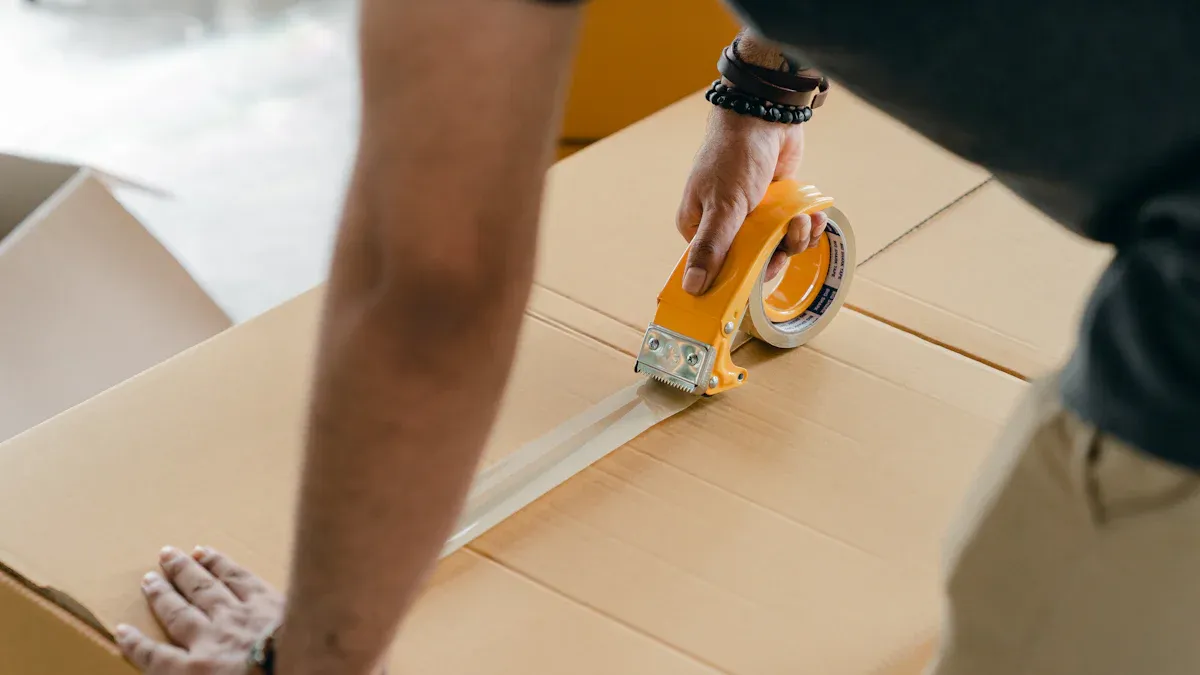
Length is always the longest side of the box. Find the side with the flap or opening. Place your measuring tape from one end to the other. Make sure you measure from the inside edge. This step gives you the true length.
Tip: Measuring the longest side first helps you follow carrier rules and keeps your items safe.
Here is a table that shows the industry-accepted definitions:
Dimension | Description |
|---|---|
Length | Longest side of the opening. |
Width | Shorter side of the opening. |
Height | Vertical measurement from base to top (Depth). |
Width is the shorter side next to the length. Use your measuring tape or ruler. Measure from one inside edge to the other. Keep your tool at a 90-degree angle to the length. This step helps you get the right width and keeps your box stable during shipping.
Measure the width from the inside of the box.
Make sure your measurement is straight and not slanted.
Write down the width in inches or centimeters.
Height is the vertical side from the base to the top. Place your measuring tape at the bottom inside edge and pull it up to the top inside edge. This step shows how tall your box is. Height is important for stacking and for carrier calculations.
Note: Carriers use height to figure out shipping costs. Accurate height measurements help you avoid extra fees.
Always record the inside dimensions. Internal measurements show how much space you have for your items and packing materials. You need these numbers to pack your products safely and prevent damage. Carriers use outside dimensions for shipping costs, but you need inside dimensions for packing.
Write down length, width, and height in the correct order.
Double-check your numbers before you ship.
Use the formula Length × Width × Height to find the volume.
Standard box sizes exist, but you must measure box dimensions for each shipment. The formula for volume helps you pack items efficiently and keeps your shipping costs low.
Callout: Knowing how to measure box dimensions helps you avoid mistakes, save money, and protect your items during transit.
You should always measure from the inside edges of the box. This gives you the most accurate space for your items. If you measure from the outside, you might get a number that is too big. This can lead to extra shipping costs or items that do not fit well. Many people make mistakes by using damaged tools or by not measuring the right points. You can avoid these errors by using a good measuring tape and starting at the inside corners.
Tip: Keep your measuring tape straight and flat against the box. This helps you get the correct number every time.
Carriers like FedEx and UPS now round all box measurements up to the next whole inch. Even a small change can push your package into a higher price group. For example, if your box measures 20.2 inches, you must round up to 21 inches. This can make your shipping cost much higher. In some cases, a small increase can double or even triple your shipping fee. Always round up each dimension to avoid surprise charges.
Rounding up helps you follow carrier rules.
It prevents extra fees for underestimating size.
It keeps your shipping costs clear and easy to plan.
Note: A small change in size can mean a big jump in cost. Always check the carrier’s rules before you ship.
You should always double-check your measurements before you ship. This step helps you catch mistakes and avoid problems later. Double-checking can save you money and protect your items during shipping. If you forget to check, you might pay more or have your package returned.
Write down your numbers as you measure box dimensions.
Check each number again before you pack your items.
Make sure your tools are in good shape.
Callout: Careful measuring and checking help you avoid common errors and keep your shipping smooth.
Major shipping carriers have strict rules for how you report box dimensions. You must follow these rules to avoid extra fees and delays. Each carrier has its own guidelines for measuring and listing box sizes.
UPS offers many box types, each with set dimensions and weight limits. You need to know these details before you ship. Here is a table that shows common UPS box options:
Box Type | Dimensions (L × W × H) | Weight Limit | Best For |
|---|---|---|---|
UPS Medium Express Box | 15" × 11" × 3" | Up to 20 lbs | Books, apparel, mid-sized items |
UPS Large Express Box | 18" × 13" × 3" | Up to 30 lbs | Bulkier products, electronics |
UPS Express Tube | 38" × 6" × 6" | Up to 10 lbs | Posters, blueprints, rolled documents |
UPS 10kg Box | 16" × 13" × 10" | Up to 22 lbs | International shipments, clothing |
UPS 25kg Box | 19" × 17" × 14" | Up to 55 lbs | International shipments, heavier items |
UPS Flat Rate Extra Small Box | 4" × 4" × 4" | Up to 1 lb | Sunglasses, t-shirts, small electronics |
UPS Flat Rate Small Box | 8" × 8" × 8" | Up to 5 lbs | Books, small gadgets, accessories |
UPS Flat Rate Medium Box | 12" × 12" × 7" | Up to 10 lbs | Apparel, mid-sized items |
UPS Flat Rate Large Box | 16" × 12" × 9" | Up to 20 lbs | Builder products, electronics |
UPS Flat Rate Extra Large Box | 18" × 12" × 6" | Up to 30 lbs | Large electronics, bulk shipments |
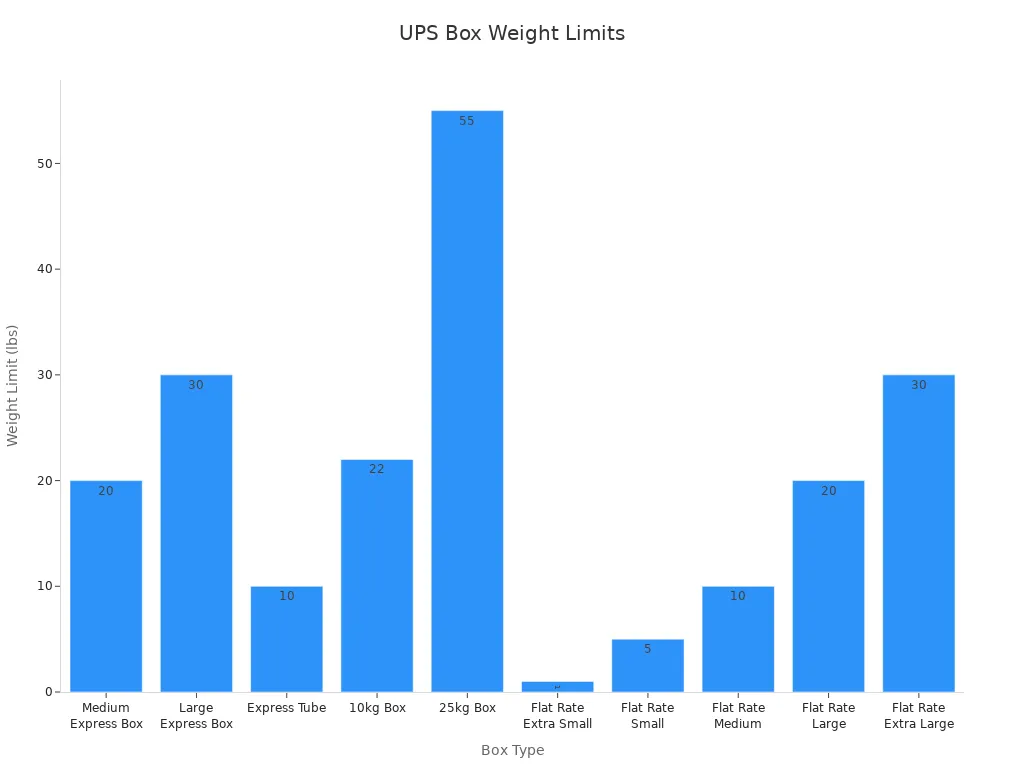
You must use the correct box and list the right size and weight. UPS checks your package with machines. If your numbers are wrong, UPS will charge you more.
FedEx has a clear process for entering box dimensions. You need to follow these steps:
Log in to your FedEx Ship Manager account.
Start a new shipment.
Enter sender and recipient details.
Go to the package details section.
Enter the length, width, and height in whole inches. Always round up.
Repeat for each package if you have more than one.
Review all details and ship.
FedEx uses your numbers to set the shipping price. If you make a mistake, you may pay extra.
USPS also has set box sizes and rules. You can see some common USPS box types in this table:
Box Type | Dimensions (L × W × H) | Best For |
|---|---|---|
Small Flat Rate Box | 8 11/16" × 5 7/16" × 1 3/4" | Jewelry, small electronics, compact items |
Medium Flat Rate Box (1) | 11 1/4" × 8 3/4" × 6" | Books, apparel, mid-sized items |
Medium Flat Rate Box (2) | 14" × 12" × 3 1/2" | Apparel, board games, larger books |
Large Flat Rate Box | 12 1/4" × 12 1/4" × 6" | Builder products, electronics, multi-item packages |
APO/FPO Large Flat Rate Box | 12 1/4" × 12 1/4" × 6" | Shipments to military addresses |
Maximum weight: 70 pounds
Maximum size: 108 inches in combined length and girth
Maximum length: 130 inches (for USPS Retail Ground, extra charges apply)
You must check these limits before you ship with USPS.
Accurate box measurements help you avoid high shipping costs and delays. Carriers use machines to check your package size. If your numbers do not match, you pay more. Carriers use a formula called dimensional weight. They charge you for the space your box takes up, not just the weight. Even a small mistake can cost you a lot of money. For example, one online store lost thousands of dollars in a few months because they measured boxes wrong. They fixed the problem by checking box sizes before shipping.
Tip: Always measure carefully and double-check your numbers. This keeps your shipping costs low and your packages moving fast.
When you measure boxes for shipping, you can make mistakes that cost you time and money. You can avoid these errors if you know what to look for. Here are the most common mistakes and how you can prevent them.
Many people measure the outside of the box instead of the inside. This mistake can lead to wrong shipping costs. Shipping companies use outside measurements to decide how much space your box takes up. If you only measure the inside, you might report a size that is too small. This can cause surprise fees or delays.
Tip: Always measure both the inside and outside of your box. Write down which measurement is which. Use a flat surface and a good measuring tape for best results.
You might mix up length, width, and height. This is a common error. Carriers use these numbers to calculate shipping costs. If you switch them, you can pay more or use too much packing material.
Measurement Error Type | Implication |
|---|---|
Incorrect Length | Higher shipping costs due to dimensional weight charges |
Incorrect Width | More material used (cardboard, filler, tape) |
Incorrect Height | Reweighing and reclassification of shipments |
About one in four shipments have problems because of mixed-up measurements. You can avoid this by writing down each number as you go and labeling them clearly.
You must round up each measurement to the next whole inch. If you do not, you may pay more later. For example, a box that measures 12.25 inches on each side will be rounded up to 13 inches by the carrier. This can raise your shipping cost by over 20%.
UPS and FedEx both require you to round up.
Always check your numbers before you finish.
Note: Even a small fraction can change your shipping price.
If you skip the double-check, you risk mistakes. Errors can lead to wrong labels, delays, or extra fees. Packages can get sent to the wrong address or stuck in customs.
Take your time and measure more than once.
Double-check all numbers before you ship.
Write down your measurements and check your labels.
Callout: Careful measuring and checking help you avoid costly shipping problems.
You can stop shipping problems if you measure boxes the right way. Always use a tape measure and measure length, width, and height in order. Make sure to round up each number to the next whole number. Check your measurements twice before you send your package. Good numbers help you avoid extra costs and slow shipping.
Measure from the inside edges of the box.
Use tools that work well.
Write down each measurement so it is clear.
Round up to the next whole number.
Measuring carefully helps your packages ship fast and saves you money.
You find the length by looking for the longest side with a flap or opening. You measure this side first. Carriers always want the length listed first.
You can use a measuring tape, ruler, or yardstick. Digital calipers help with small boxes. A notepad or phone helps you record numbers. A marker lets you label boxes.
Carriers like UPS and FedEx require you to round up to the next inch. This rule helps you avoid extra fees. Even a small difference can change your shipping cost.
You might pay more for shipping.
Your package could get delayed.
Carriers may return your box.
Always write down each number clearly to avoid mistakes.