


Choosing between rigid jewelry boxes and folding cartons affects more than packaging appearance. It also influences product protection, shipping volume, storage needs, assembly labor, and overall packaging costs.
Rigid boxes offer a sturdy structure and a premium presentation. Folding cartons ship flat and can help brands reduce storage and inbound transportation requirements. The right choice depends on your jewelry, sales channel, brand positioning, and order volume.
Table of Contents
Rigid jewelry boxes usually use thick paperboard or greyboard wrapped with printed or decorative paper. They arrive fully assembled and hold their shape during normal handling.
Folding cartons use thinner paperboard that is printed, die-cut, scored, and glued. They are usually shipped flat and assembled before use.
Comparison Factor | Rigid Jewelry Boxes | Folding Cartons |
|---|---|---|
Structure | Thick board with a stable shape | Foldable paperboard structure |
Shipping format | Usually shipped assembled | Usually shipped flat |
Storage | Requires more space per empty box | Uses less space before assembly |
Presentation | Suits premium gifting and keepsake packaging | Suits lightweight retail and everyday packaging |
Product protection | Strong outer structure; inserts are still important | Depends on board grade, carton design, and inserts |
Fulfillment | Ready to use, with little box assembly | May require folding and closing before packing |
Customization | Supports specialty paper, foil stamping, embossing, and custom inserts | Supports printed graphics, coatings, foil stamping, and other finishes |
Cost considerations | May involve higher material, assembly, and freight costs | Can reduce shipping volume, but tooling and order quantity affect unit cost |
Neither format is automatically better for every brand. Compare the complete packaging and fulfillment costs rather than the box price alone.
Rigid jewelry boxes have a solid feel and maintain their shape when opened and closed. They are often suitable for fine jewelry, gift sets, and products where the packaging is part of the customer experience.
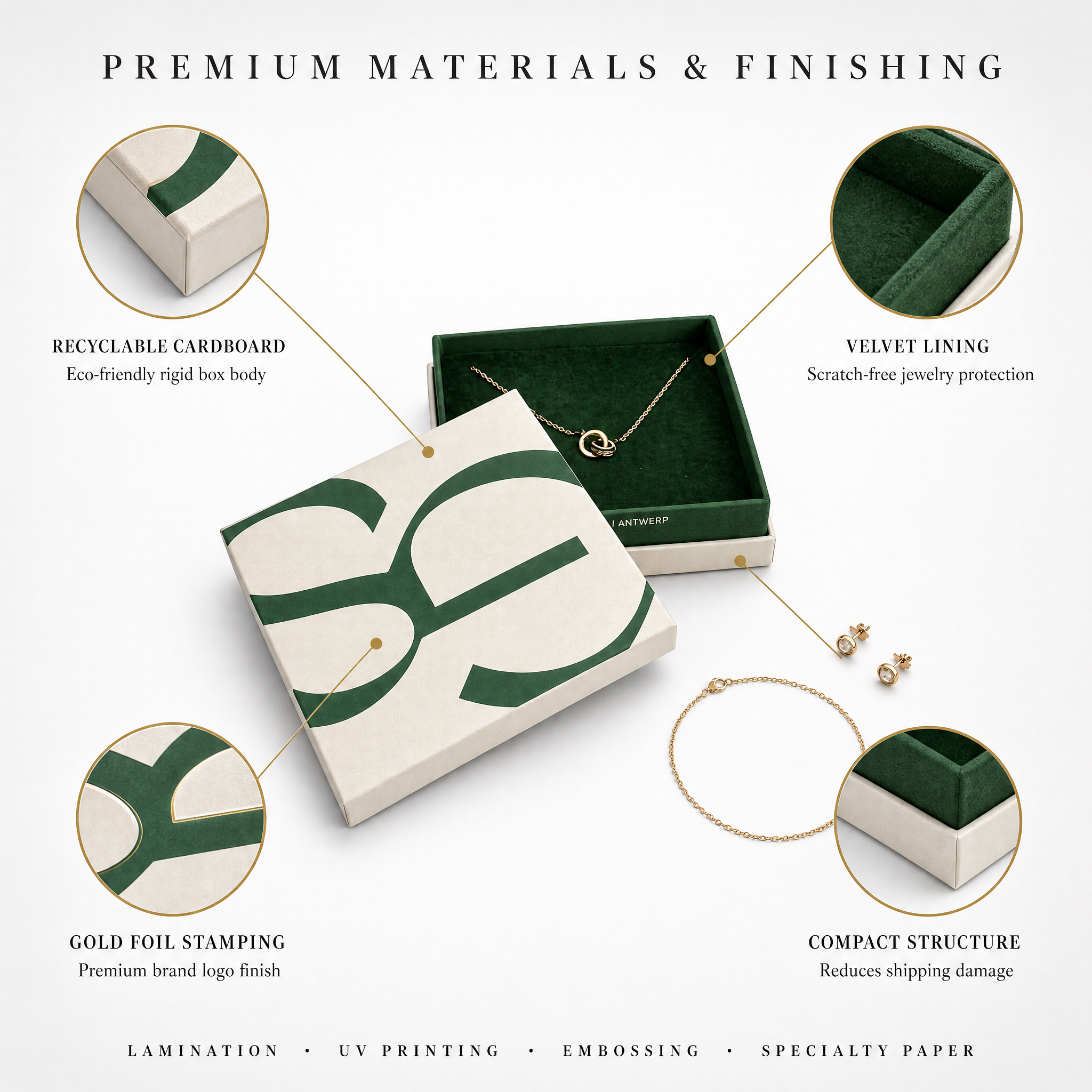
Brands can customize rigid boxes with specialty paper, fabric-like finishes, foil logos, magnetic closures, and fitted inserts. These features help create a distinctive presentation and keep jewelry in place.
Explore ITIS's custom rigid and magnetic box solutions to review available structures and finishing options.
Folding cartons are often suitable for fashion jewelry, retail packaging, promotional products, and high-volume orders. Their flat shipping format can help reduce the space required before use.
A folding carton can still look professional. Printed graphics, color matching, coatings, foil stamping, and a well-designed insert can support a consistent brand identity.
However, the carton must be designed around the jewelry's size, weight, and fragility. For delicate items, a suitable insert or an additional protective layer may be necessary.
The outer box is only one part of the packaging system. Inserts help prevent jewelry from shifting, tangling, or rubbing against other surfaces.
For rings, earrings, necklaces, and bracelets, consider the product's shape and how it will be displayed. Test the insert and outer box together to confirm that the jewelry remains secure during handling and transportation.
Rigid boxes usually arrive assembled, so shipments take up more space than comparable boxes packed flat. This can increase inbound freight and warehouse space requirements, depending on box dimensions and shipping arrangements.
Folding cartons can be packed flat, allowing more units to fit into a given shipping or storage volume. This can be useful for brands with limited warehouse space or frequent replenishment orders.
ITIS also offers folding magnetic boxes, which combine a foldable structure with a more gift-oriented presentation. This structure differs from a standard folding carton, so buyers should compare its assembly, cost, and finished appearance with other options.

Rigid boxes are generally ready to use when delivered. Staff can place the insert and jewelry inside before adding the box to the shipping package.
Folding cartons may require opening, folding, loading, and closing before use. This adds a fulfillment step, although some designs and production lines can support efficient assembly.
The best option depends on your packing process. Estimate the labor required for each order and consider whether cartons will be assembled in batches or as orders arrive.
When evaluating packaging options, include the following costs:
Box manufacturing and finishing
Printing, tooling, and sampling
Inbound freight
Warehouse storage
Assembly and packing labor
Protective outer packaging
Damage, returns, and replacement shipments
A folding carton may lower freight and storage costs but require more assembly work. A rigid box may cost more to ship but provide the presentation your brand needs. Compare both formats using your actual box dimensions, order quantity, freight method, and fulfillment process.
Both rigid boxes and folding cartons can be customized with brand colors, printed graphics, foil stamping, embossing, and selected surface finishes. The available options depend on the paper, structure, production method, and budget.
Rigid boxes often use a thick board core with a separate exterior wrap. Folding cartons usually print and finish the paperboard before die-cutting and folding.
Ask your packaging supplier to recommend materials based on product weight, box size, desired appearance, and handling requirements. Avoid selecting board thickness based on a general rule alone.
Recyclability depends on the complete packaging design, not just the main board. Laminations, coatings, magnets, foam inserts, fabric, and adhesives may affect how easily components can be separated and recycled.
A paper-based carton with compatible finishes may be easier to recycle in some local systems. A rigid box may also use recyclable paper components, but mixed materials can make disposal more complicated.
If sustainability is a purchasing priority, ask which components can be separated and confirm local recycling requirements before making a claim on your packaging.
Before placing an order, review these questions:
What is the product? Consider its size, weight, fragility, and display requirements.
What brand experience do you need? Decide whether a substantial gift box or a lightweight retail carton better fits your positioning.
Where will the packaging be used? Retail displays, e-commerce orders, gift sets, and promotional products may need different structures.
How much storage space is available? Compare the shipping dimensions of assembled and flat-packed options.
How will orders be packed? Include assembly time, staff workflow, and any automation requirements.
What is the order quantity? Ask about setup costs, sampling, minimum order quantities, and repeat-order requirements.
How will the jewelry be protected? Check insert fit, closure security, and the need for an outer shipping carton.
What are the sustainability requirements? Review the materials, finishes, inserts, and local disposal options.
Request samples before mass production. Check the dimensions, material feel, printing, closure, insert fit, and packing process. For e-commerce shipments, test the complete package under realistic handling conditions.
For customized structures and materials, visit ITIS's OEM jewelry packaging solutions to learn more about the design, sampling, and production process.
Rigid jewelry boxes and folding cartons serve different packaging needs. Rigid boxes are a strong choice when presentation, a substantial feel, and a stable structure are priorities. Folding cartons are useful when flat shipping, compact storage, and efficient material use matter.
The right decision depends on the product, brand position, order volume, and complete fulfillment cost. Compare samples and calculate the costs across manufacturing, shipping, storage, assembly, and product protection before selecting a format.
To discuss a customized packaging project, share your jewelry dimensions, order quantity, preferred materials, insert requirements, and branding details with ITIS.
Not in every case. Rigid boxes offer a sturdy structure and premium presentation, while folding cartons can reduce shipping volume and storage needs. The best choice depends on the product and brand requirements.
They can be, because they are usually shipped flat. Actual savings depend on carton dimensions, order quantity, freight method, and packaging configuration.
Yes. High-quality printing, foil stamping, coatings, and custom inserts can improve their presentation. Brands should also check whether the structure provides suitable protection for the jewelry.
For many e-commerce orders, an additional protective shipping carton is recommended. It helps protect the presentation box from handling damage during delivery.
It depends on the materials, coatings, inserts, adhesives, and local recycling facilities. Compare the complete packaging design rather than judging sustainability by the box structure alone.


