


Designing the ideal packaging concept often hits a common procurement roadblock. You finalize a beautiful design only to find that factory production minimums far exceed your current inventory needs. The tension between achieving a premium unboxing experience and managing cash flow, warehousing space, and inventory turnover is a constant challenge for buyers. Custom tooling, specialized materials, and factory setup times require upfront capital.
A custom jewelry box MOQ is not an arbitrary number. It reflects strict manufacturing economics. Factory floors operate on efficiency, and stopping a line to calibrate machines for a small run costs money. This guide provides a technical framework to help you evaluate suppliers, optimize design specs to lower minimums, and calculate the true cost of custom packaging.
MOQs are driven by setup costs: Machine calibration, custom cutting dies, and raw material sourcing dictate baseline production thresholds.
Design complexity dictates flexibility: Fully bespoke structural designs (like rigid magnetic boxes with custom-dyed velvet) demand higher MOQs than standard sizes with custom exterior printing.
Per-unit cost vs. total investment: Ordering 500 units might cost $3.00 each, while 3,000 units might cost $1.20 each; buyers must evaluate the break-even point against their storage capacity and cash flow.
Negotiation requires standardization: Buyers can often bypass strict MOQs by standardizing box dimensions across multiple jewelry lines and varying only the internal inserts.
Table of Contents
Understanding what constitutes a viable production run for a packaging manufacturer helps you negotiate better terms. Suppliers set baseline requirements to ensure the production process remains economically feasible. A factory must cover its initial setup costs while maintaining operational efficiency on the floor.
Initiating a production run involves heavy fixed costs. Creating custom dielines, calibrating offset printing presses, and setting up heavy die-cutting machines require significant time and skilled labor. A press operator might spend two hours just aligning the CMYK plates for your specific brand colors. These fixed costs must be amortized across a minimum number of units. If the volume is too low, the setup cost per box becomes prohibitively expensive, making the project unviable for both you and the factory.
Packaging suppliers do not hold infinite stocks of every paper type. They must purchase raw materials in bulk from their own upstream paper mills and board suppliers. Materials like MDF, rigid greyboard, specialty art papers, and industrial adhesives have their own minimum purchase requirements. When you order a custom jewelry box, the factory must buy enough raw material to fulfill your specific design. If your design calls for a rare 120gsm textured black art paper, the paper mill might require a one-ton minimum order, which directly forces the packaging factory to raise your MOQ.
Premium packaging requires intense manual labor. Tasks such as hand-wrapping rigid boxes, folding sharp corners, and gluing delicate inserts are labor-intensive. Assembly lines require a minimum volume to achieve a rhythm. Training workers for a specific folding and gluing process is only viable if the production run is large enough to justify the time invested. A run of 100 boxes means the workers finish just as they get used to the assembly steps, killing factory efficiency.
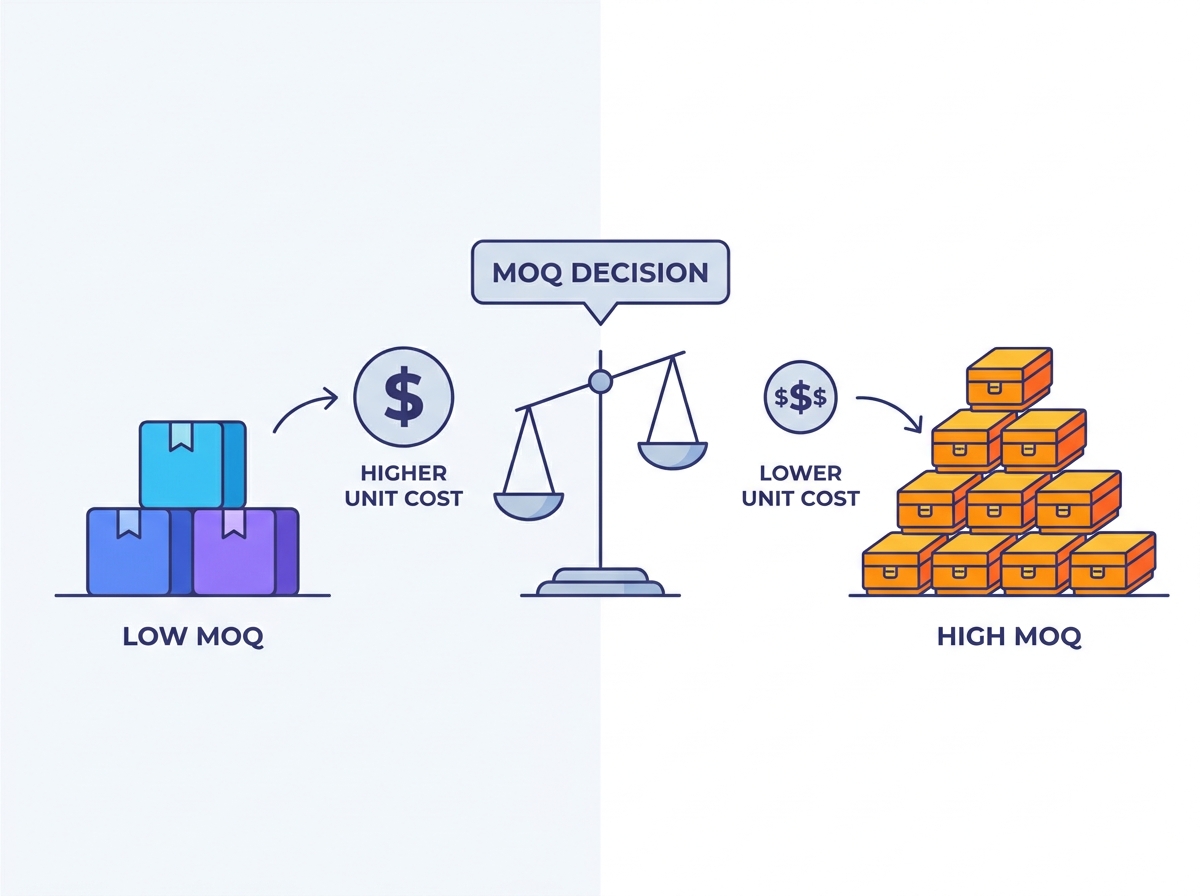
Different volume tiers unlock varying levels of customization. Understanding these categories helps you align your packaging strategy with your current production needs.
Volume Tier | Unit Range | Customization Level | Best For |
|---|---|---|---|
Micro-Volume | Under 100 | Off-the-shelf blank boxes, manual stickers | Hobbyists, micro-brands, handmade sellers |
Low Volume | 100–500 | Pre-manufactured boxes with foil stamping or UV decals | Market testing, limited drops, emerging brands |
Medium Volume | 500–2,000 | Fully custom dimensions, offset printing, custom inserts | Established brands scaling operations |
High Volume | 3,000+ | Specialty materials, complex structures, lowest unit cost | Wholesalers, retail chains, enterprise brands |
For volumes under 100 units, you are generally limited to off-the-shelf, blank boxes. Personalization happens post-purchase through manual methods like custom stickers, ribbons, or hand-stamping. You cannot change the box dimensions or the core material.
The 100–500 unit tier usually restricts you to pre-manufactured blank boxes with post-production logo applications. Factories will take a stock box and run it through a hot foil stamping machine or apply screen printing. You get your logo on the box, but you cannot alter the structural integrity or the interior layout.
Ordering between 500 and 2,000 units unlocks custom dimensions, specific board thicknesses (like 1200gsm rigid board), full-color offset printing, and custom-cut inserts. The factory will create a unique cutting die specifically for your product. This is where true brand differentiation happens.
High-volume orders offer the lowest per-unit cost and access to highly specialized materials, such as custom-dyed fabrics and complex multi-tier drawer structures. Factories prioritize these runs, offering better scheduling and dedicated quality control teams.
Specific packaging features directly increase or decrease the required minimum order. Analyzing these features helps you make informed design decisions on the drafting table.
Folding cartons generally have lower setup costs and lower MOQs because they are cut and glued entirely by automated machines. In contrast, rigid two-piece or drawer boxes require higher setup costs and higher MOQs. Rigid boxes use thick greyboard (often 800gsm to 1500gsm) that must be V-grooved, folded, and then hand-wrapped with thinner printed paper. This manual wrapping process demands higher minimums.
Standard foam or die-cut cardboard inserts offer flexible MOQs because the raw materials are abundant. However, custom-molded EVA, flocked blister packs, or custom-dyed velvet pillows require strict raw material MOQs. If you need a specific density of EVA foam to hold a heavy brass necklace, the foam supplier will dictate the minimum order. Sourcing specific materials like anti-tarnish linings for silver jewelry also impacts minimums, as these chemically treated fabrics are bought in massive rolls.
Traditional branding methods like hot foil stamping and silk screen printing require custom metal plates or mesh screens. A copper stamping plate costs money to mill, affecting the initial setup fees. Offset printing requires higher minimums to justify the creation of aluminum CMYK plates. Specialty finishes like blind debossing, spot UV coating, and soft-touch lamination require separate passes through different factory machines, altering production thresholds and pushing MOQs higher.
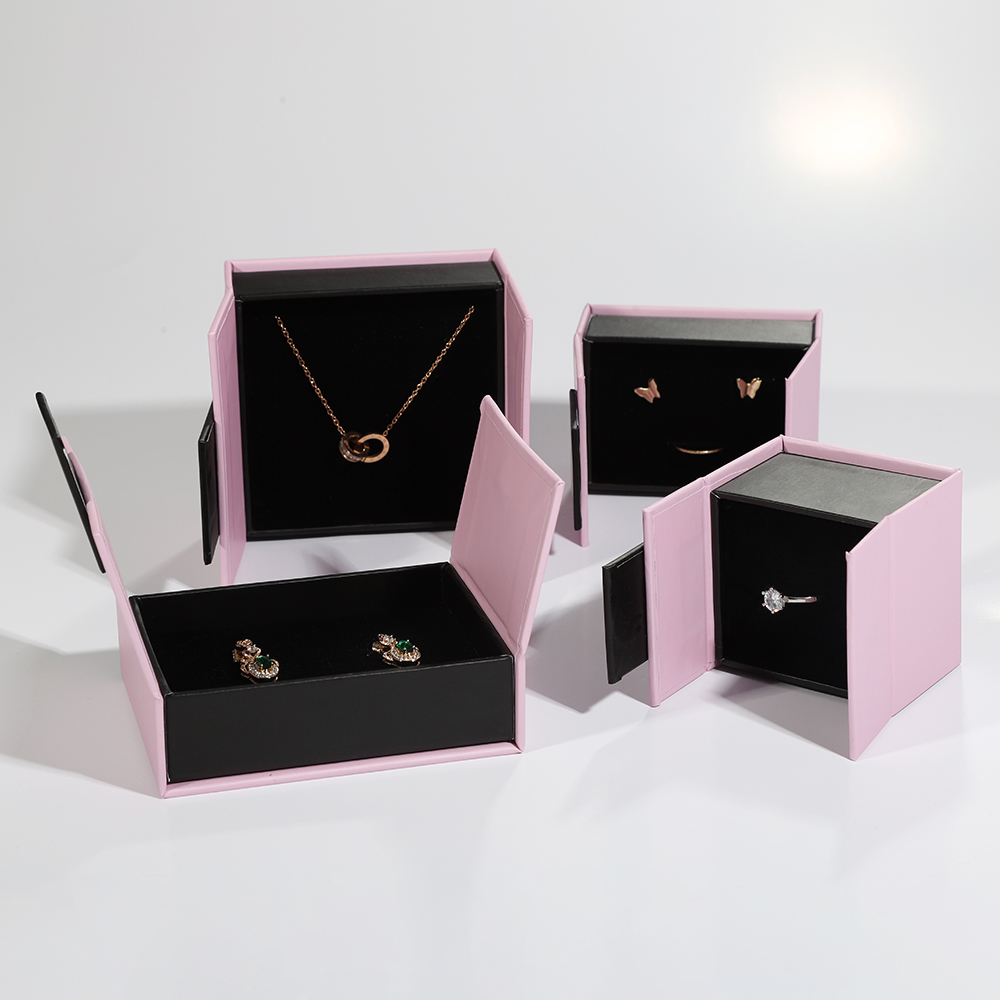
Securing an accurate quote requires specific design deliverables. Proper planning ensures a smooth transition from design to mass production without unexpected tooling fees.
Submit precise vector files in .AI, .EPS, or .PDF format with all fonts outlined.
Provide accurate 3D dimensions (Length x Width x Depth) in millimeters.
Specify Pantone Solid Coated color matching codes for all printed elements.
Detail the exact material specifications, including board thickness and paper finish.
A standard template, or dieline, is established early in the process. The factory engineers this flat layout to ensure the box folds correctly. Design modifications after dieline approval trigger additional tooling fees and force a reset of the supplier's MOQ calculation because new cutting dies must be manufactured.
Mapping out standard timelines helps you align wholesale jewelry stock arrivals with packaging delivery. A typical schedule includes 7 days for dieline creation, 10 days for physical sampling, and 25 days for mass production. Proper scheduling prevents inventory bottlenecks on your warehouse floor.
Ordering to meet an MOQ involves financial trade-offs. You must evaluate the hidden costs of holding inventory against the benefits of bulk pricing.
Conducting a break-even analysis is essential. You must determine when the discount of a 2,000-unit order justifies tying up capital compared to a 500-unit order. Cash flow management is often more critical than achieving the absolute lowest per-unit cost. Tying up thousands of dollars in cardboard sitting on a shelf limits your ability to buy actual jewelry inventory.
Rigid jewelry boxes have a massive physical footprint. They do not fold flat. Storing them in non-climate-controlled warehouses for over 12 months poses severe environmental degradation risks. Animal-based glues can weaken, paper can warp from humidity, and white materials will yellow if exposed to warehouse lighting or heat.
Dimensional weight (DIM weight) heavily influences shipping costs. A high-MOQ order of rigid boxes ships fully assembled. You are essentially paying to ship air across the ocean. This drastically increases sea freight or air freight costs compared to flat-packed folding cartons. Always calculate the landed cost, not just the factory gate price.
If you want custom packaging but cannot meet a single SKU's high MOQ, you have actionable tactics available to mitigate these requirements on the factory floor.
Using one universal box size for necklaces, bracelets, and large earrings is a highly effective strategy. You can differentiate the SKUs by swapping out low-MOQ internal inserts. The factory runs 3,000 identical outer boxes to meet the MOQ, but cuts 1,000 necklace inserts, 1,000 bracelet inserts, and 1,000 earring inserts.
Work with your supplier to print multiple box designs on the same master sheet. This gang run approach helps meet the factory's overall minimum for offset printing. You can produce different colors for different collections simultaneously as long as they share the same board thickness and finish.
Negotiate with the manufacturer to produce the full MOQ to secure the lower price, but arrange to hold half the inventory at the factory. You can then ship the boxes in staggered phases. This eases your local storage constraints while keeping the factory lines running efficiently.
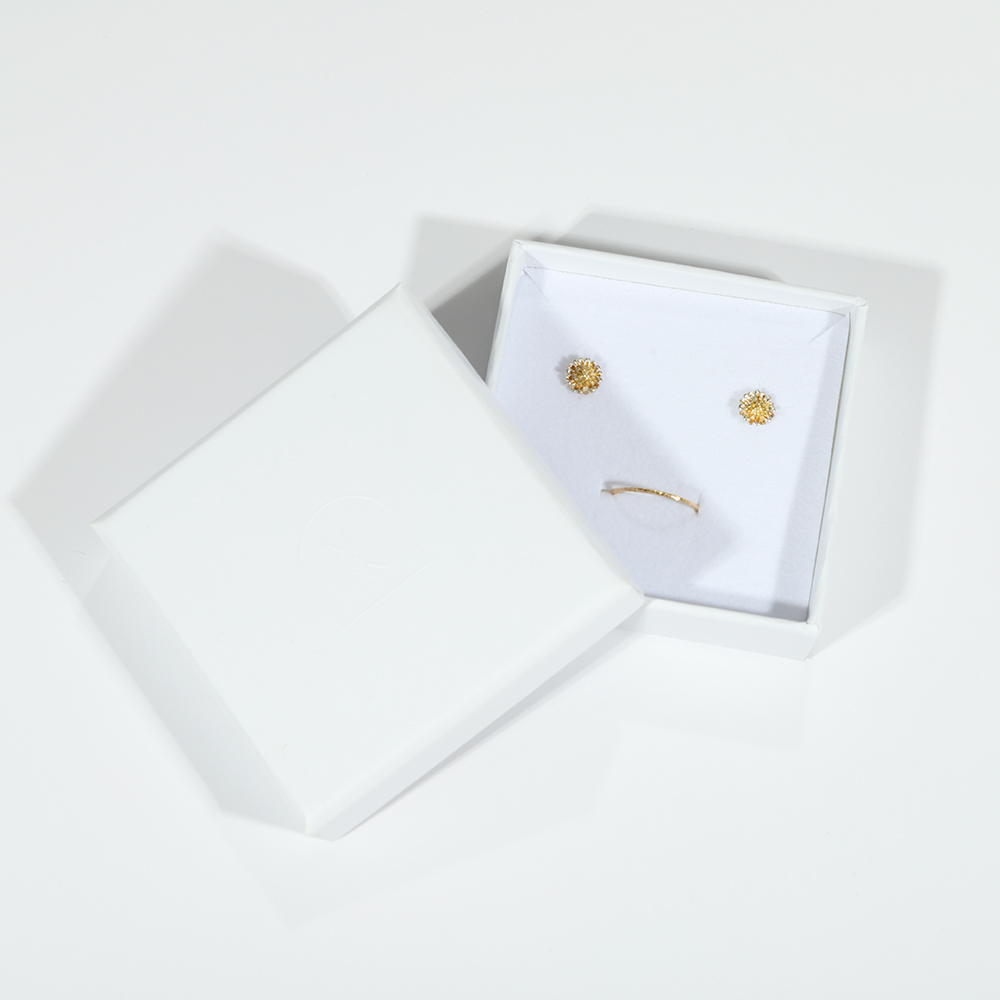
Selecting a manufacturing partner involves more than just finding the lowest minimum order. Ensuring quality and reliability on the production line is paramount.
Demand a physical, fully finished pre-production sample (PPS) before committing to a bulk MOQ. Do not rely on digital 3D renders. You need to feel the hinge tension, check the glue lines, and test the insert fit with your actual jewelry. Sample costs are typically credited toward the final order.
Evaluate the supplier's defect tolerance using AQL (Acceptable Quality Limit) standards. Set up an inspection protocol before the bulk production leaves the factory. Hire a third-party inspector to check for glue spots, misaligned foil stamping, or off-palette lining colors. Catching defects at the factory prevents you from receiving a container full of unusable boxes.
A custom jewelry box MOQ is not simply a purchasing limitation—it reflects the realities of manufacturing efficiency, material sourcing, and production costs. By understanding how MOQ is calculated and optimizing your packaging design, brands can reduce unnecessary expenses while achieving premium packaging that supports long-term business growth.
Partnering with an experienced packaging manufacturer can also make MOQ management much easier. Shenzhen ITIS specializes in custom jewelry boxes and luxury packaging solutions, providing flexible OEM/ODM services, innovative structural designs, premium materials, and professional engineering support for global jewelry brands. With advanced manufacturing capabilities, strict quality control, and extensive project experience, Shenzhen ITIS helps customers optimize packaging costs while delivering high-quality custom packaging solutions.
Standardize packaging dimensions whenever possible to reduce tooling costs and production minimums.
Balance unit price, warehousing costs, and cash flow before placing large-volume orders.
Prepare complete design files and material specifications to receive accurate factory quotations.
Work with manufacturers that offer flexible production planning and professional packaging expertise.
Before selecting a custom jewelry box manufacturer, evaluate their production capacity, engineering support, quality management, OEM/ODM experience, and ability to provide flexible MOQ solutions for your business.
A: Yes, you can negotiate by standardizing box dimensions across multiple product lines or agreeing to split shipments. This helps the factory maintain machine efficiency while easing your upfront inventory burden and storage requirements.
A: The standard MOQ for fully custom rigid magnetic boxes typically ranges from 500 to 1,000 units. This depends heavily on the complexity of the wrapping materials, the thickness of the greyboard, and the structural design of the magnetic flap.
A: Yes, changing the exterior color usually requires separate print runs, new offset plates, or different raw material sourcing. This process often resets the MOQ requirement for each specific color variant you want to produce.
A: Sourcing specialized materials like anti-tarnish fabric requires the factory to meet high raw material minimums from their own textile suppliers. This upstream requirement directly increases the final MOQ for your finished boxes.
A: It is significantly cheaper to ship flat-packed folding cartons due to lower dimensional weight. Assembled rigid boxes take up much more space in a shipping container, drastically increasing sea and air freight costs.
A: You must provide vector design files (.AI, .EPS, or .PDF), precise 3D dimensions in millimeters, exact material preferences, and Pantone Solid Coated color matching codes to ensure an accurate factory quote.


