


Packaging dictates the first physical interaction a customer has with high-end jewelry. Subpar packaging degrades perceived value instantly, while over-investing in inefficient structures erodes profit margins. Sourcing overseas presents significant risks on the factory floor. You might face inconsistent quality across batches, misaligned structural engineering that damages delicate pieces during transit, and hidden production costs that surface late in the process. Furthermore, trading companies frequently masquerade as direct factories, complicating communication and accountability. You need a systematic procurement framework to navigate these operational hazards. This guide helps you vet, evaluate, and partner with a reliable supplier based on technical capabilities, quality control, and scalable unit economics. We will break down the exact manufacturing tolerances, material specifications, and quality assurance protocols required to secure premium packaging without compromising your supply chain integrity.
Direct factory verification is critical; buyers must distinguish between actual manufacturers with in-house structural engineering and third-party trading companies.
A rigorous prototyping phase (Pre-Production Samples) is non-negotiable for validating custom inserts, closure mechanisms, and material finishes before mass production.
Minimum Order Quantities (MOQs) and unit pricing should be evaluated alongside tooling costs, mold fees, and long-term scalability.
Robust Quality Control (QC) frameworks, including strict Acceptable Quality Limit (AQL) standards, must be contractually defined to prevent high defect rates in final shipments.
Table of Contents
Before contacting suppliers, you must define exact project parameters. Vague specifications lead to misaligned expectations and production delays. Map your brand positioning directly to specific manufacturing requirements. A sustainable luxury brand requires different substrates than a mass-market fashion label. Your core mission statement should dictate material choices, structural complexity, and finishing techniques.
Determine the optimal box style to match your product lines. Classic lid-and-base structures offer timeless elegance and straightforward automated assembly. Drawer-style sliding boxes provide a modern unboxing experience but require precise friction tolerances. Book-style magnetic closures feel substantial and secure, demanding heavy-duty greyboard and concealed magnet routing. You might also explore heart-shaped, round, or multi-tier jewelry chests for specialty collections. Each architecture requires different manufacturing techniques, die-cutting equipment, and manual assembly skills.
Define the necessary protection levels for transit and retail display. Structural integrity is paramount. Specify rigid board thickness based on product weight—typically ranging from 800gsm to 1500gsm greyboard. Demand crush resistance testing for boxes shipping globally. Impact testing ensures delicate hinges or clasps survive rough handling in fulfillment centers. A well-engineered custom jewelry box protects the product while maintaining aesthetic appeal under stress.
Establish baseline expectations for tactile feel and usability metrics. The unboxing experience drives customer satisfaction and brand retention. Test closure mechanisms rigorously on the factory floor. Concealed magnetic strength must be calibrated perfectly to avoid snapping shut too aggressively or failing to hold. Friction fits on lids should glide smoothly without trapping air and creating a vacuum seal. Ribbon pulls and swing-out compartments must withstand repeated use without fraying or tearing. Visual presentation must align with tactile quality, ensuring no exposed greyboard edges or visible glue lines.
Box Architecture | Greyboard Thickness | Closure Mechanism | Primary Use Case |
|---|---|---|---|
Lid-and-Base (2-Piece) | 800gsm - 1000gsm | Friction Fit | Rings, Stud Earrings |
Drawer / Sliding Box | 1000gsm - 1200gsm | Ribbon Pull / Thumb Notch | Necklaces, Bracelets |
Book-Style Magnetic | 1200gsm - 1500gsm | Concealed Neodymium Magnets | Heavy Statement Pieces, Watches |
Clamshell with Hinge | 1200gsm + Plastic Core | Spring Hinge / Metal Clasp | High-End Engagement Rings |

A diverse, traceable material supply chain is essential for consistent production. Your manufacturer must source premium substrates reliably, regardless of seasonal shortages. Request FSC-certified paperboards for sustainable lines to ensure responsible forestry. Evaluate their access to premium velvet, PU leather, solid wood, and MDF. Specialty textured papers elevate the tactile experience but require specific adhesives to prevent warping. Supply chain transparency ensures consistent quality across multiple production runs, preventing unauthorized material substitutions.
Evaluate the manufacturer's ability to source eco-friendly alternatives. Biodegradable and recycled materials are increasingly standard on the factory floor. However, these materials must not compromise structural rigidity or moisture resistance. Luxury aesthetics must remain intact even when using molded pulp or recycled kraft paper. Ask for material data sheets to verify environmental claims. A reputable custom jewelry box manufacturer China maintains strong relationships with certified raw material suppliers and audits them regularly.
Assess the factory's in-house design and engineering capabilities. Relying on outsourced design slows down revisions and introduces communication errors. Look for proficiency in CAD design and die-line creation. 3D structural modeling helps visualize complex geometries before cutting physical samples. In-house engineers anticipate production bottlenecks early. They optimize designs for efficient assembly, material yield, and automated gluing processes.
Outline technical requirements for custom inserts. Inserts secure the jewelry and prevent transit damage. Specify die-cut EVA foam for rigid support, ensuring the density matches the jewelry weight. Molded pulp offers an eco-friendly alternative for high-volume runs. Velvet-wrapped sponge provides a traditional luxury feel but requires precise manual wrapping to avoid bunching. Satin lining adds elegance but needs careful tensioning. Tailor insert dimensions precisely to rings, necklaces, bracelets, or earrings using digital calipers.
Require V-grooving machinery for sharp, 90-degree corners on rigid boxes.
Specify the exact density (e.g., 35kg/m³) for EVA foam inserts to prevent sagging.
Demand humidity-controlled storage for raw paperboard to prevent warping before assembly.
Ensure die-cutting tolerances are held within +/- 0.5mm for multi-layered inserts.
Define technical standards for high-end finishes. Surface treatments differentiate premium packaging on the retail shelf. Specify hot foil stamping in gold, silver, or rose gold, ensuring the factory controls stamping temperature and pressure to prevent foil bleeding. Blind embossing and debossing add subtle texture and require heavy-duty brass dies. Spot UV coating highlights specific design elements and must register perfectly with the underlying print. Soft-touch lamination provides a premium tactile feel but requires anti-scuff coatings to survive shipping.
Analyze logo application technologies for long-term durability. Logos must resist fading, scratching, and peeling under UV light and friction. Metal plate logo attachments require precise recessing into the greyboard. Silk-screen printing must use high-adhesion inks cured properly in UV tunnels. Debossed metal badges add significant perceived value but require custom tooling. Request physical samples of previous logo work to assess durability, edge sharpness, and alignment precision.
Discuss color-matching capabilities and ink quality. Pantone (PMS) accuracy is non-negotiable for brand consistency. Inconsistent colors dilute brand identity and signal poor quality control. Specify soy-based eco-inks for sustainable projects. Request drawdown samples to verify color accuracy on your specific chosen paper stock. Ink interacts differently with coated versus uncoated papers, often requiring multiple adjustments on the printing press to hit the target hue.

Analyze the balance between automated machinery and skilled manual labor on the production floor. Modern facilities utilize automated die-cutting for precision and speed. Automated gluing machines ensure consistent adhesive application, preventing glue seepage. Rigid box wrapping machines speed up production and ensure tight paper tension. However, intricate velvet lining requires skilled hands. Edge wrapping, ribbon insertion, and multi-piece insert assembly often demand manual dexterity that machines cannot replicate.
Modern, automated facilities reduce variance at high volumes. Machines minimize human error on repetitive tasks like scoring and folding. This lowers defect rates significantly across large batches. However, fully automated lines struggle with highly complex, bespoke designs or unusual shapes. Evaluate the factory floor to ensure they deploy the right mix of technology and craftsmanship for your specific design requirements.
Verify the manufacturer’s capacity to handle your specific order scale. Small-batch bespoke runs require flexible assembly lines and rapid tooling changes. High-volume mass production demands automated efficiency and large raw material staging areas. Mismatched capacity leads to delayed shipments or rejected orders. Ask about their daily output capacity for your specific box style and verify their equipment list.
Assess the technical setup of the production floor. Conduct on-site or virtual audits using live video feeds. Check die-cutting accuracy on current production runs. Observe gluing precision to ensure no excess adhesive spills over edges or stains the interior lining. Inspect cleanroom packaging areas. Dust, debris, and stray fibers ruin high-gloss finishes and velvet interiors instantly. Ensure workers wear gloves and hairnets in final assembly zones.
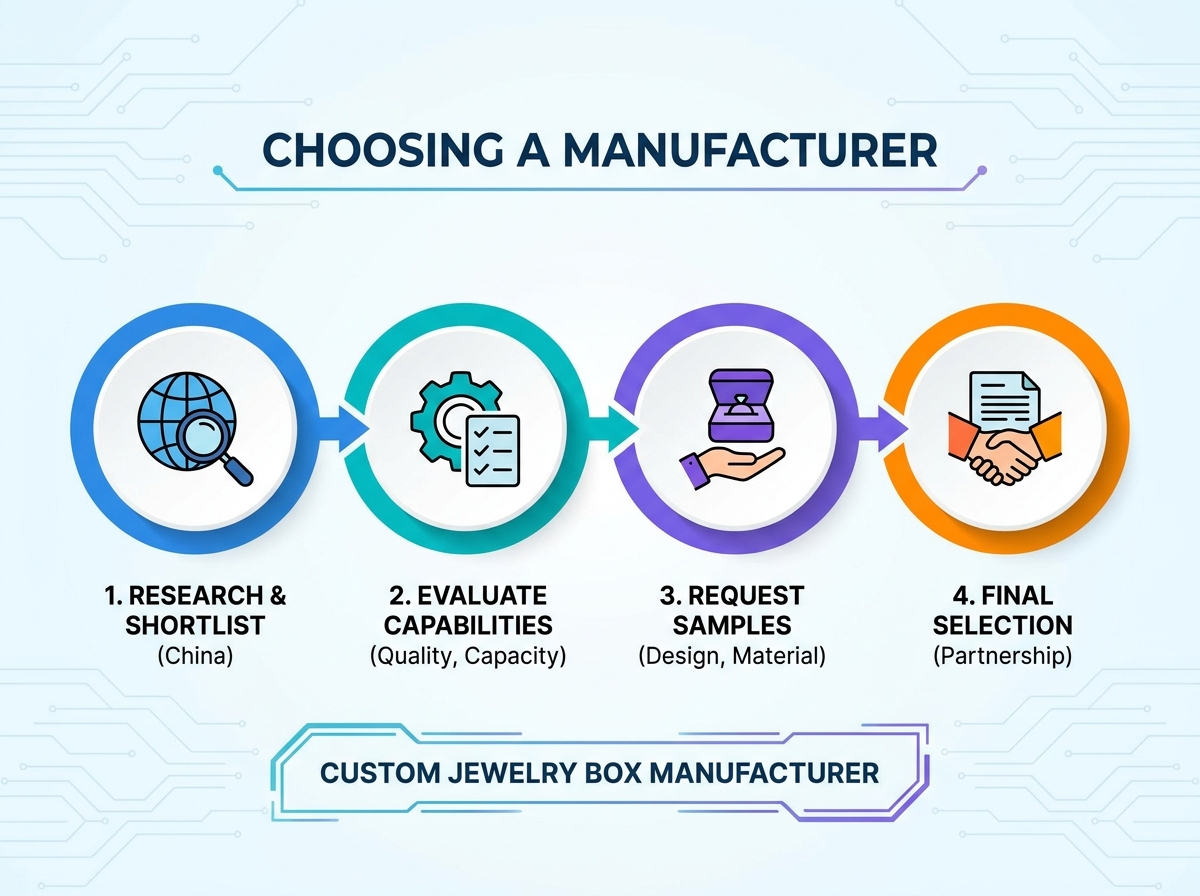
Detail the three critical stages of factory QC. Incoming Quality Control (IQC) inspects raw materials before production begins, checking paper moisture content and board thickness. In-Process Quality Control (IPQC) catches assembly errors on the line, verifying glue adhesion and fold alignment. Final Quality Control (FQC) verifies the finished product before shipping, checking for cosmetic flaws and functional performance. Missing any stage guarantees defective units will reach your warehouse.
Establish specific Acceptable Quality Limit (AQL) standards contractually. Recommend AQL 1.5 for major defects and AQL 2.5 for minor defects in luxury packaging. Define cosmetic defects clearly with visual reference guides. Glue marks, misaligned foil, and paper peeling are unacceptable. Functional defects include weak magnets, faulty hinges, or loose inserts. Strict AQL standards force the factory to maintain discipline and calibrate their machinery properly.
List non-negotiable facility certifications. ISO 9001 ensures a standardized quality management system with documented procedures. FSC certification guarantees sustainable forestry practices for paper materials and requires strict chain-of-custody tracking. These certifications indicate a mature operational structure capable of handling complex orders. Request copies of certificates and verify their validity with the issuing bodies directly.
Social compliance audits mitigate brand reputation risks. Consumers demand ethical supply chains and transparency. Look for SMETA or BSCI audit reports. These audits verify fair labor practices, safe working conditions, proper ventilation for adhesives, and environmental compliance regarding waste disposal. Partnering with an unethical supplier exposes your brand to severe public relations crises and potential import bans.
Break down the total cost structure of your packaging project. Unit economics involve more than just the final box. Tooling and die costs apply to custom shapes and unique inserts. Custom mold fees are required for specific plastic, metal, or molded pulp components. Setup fees apply to specialty surface finishes like custom foil stamping or embossing dies. Understand these fixed costs upfront to avoid surprises on the final proforma invoice.
Unit economics scale with volume. Fixed costs spread out over larger orders, reducing the per-unit burden significantly. Negotiate tiered pricing structures for growing product lines. Establish clear cost expectations for future reorders once molds and dies are already paid for and stored safely at the facility. Ensure the factory agrees to maintain your tooling for a specified number of years.
Standard industry MOQs for fully custom packaging vary based on material constraints and machine setup times. Basic rigid boxes typically require 500 units. Complex, multi-layered, or molded designs often demand 1,000 to 3,000 units to justify the engineering time. Material availability, style complexity, and box dimensions drive these requirements. High MOQs tie up capital and increase inventory storage risks in your warehouse.
Negotiate lower initial MOQs for pilot runs strategically. Use standardized outer box sizes to reduce tooling costs and machine setup time. Customize only the internal inserts for different jewelry pieces. This approach consolidates volume across multiple SKUs. It satisfies factory minimums for the outer shell without incurring exorbitant per-unit penalties for small individual batches of specific inserts.
Customization Level | Typical MOQ | Tooling Investment | Lead Time Impact |
|---|---|---|---|
Standard Box + Custom Logo Foil | 500 units | Low (Foil stamp die only) | Fast (15-20 days) |
Custom Size + Custom EVA Insert | 1,000 units | Medium (Cutting dies, EVA molds) | Standard (25-30 days) |
Fully Bespoke Shape + Metal Hardware | 3,000+ units | High (Custom hardware molds, complex dies) | Slow (35-45 days) |
Digital 3D renderings are insufficient for final quality approval. They cannot simulate tactile feel, hinge friction, or magnet strength. Screen colors rarely match physical print exactly due to RGB versus CMYK color space differences. Digital proofs only verify artwork placement, spelling, and general proportions. Never approve mass production based solely on a digital PDF or 3D render.
Order a fully functional Pre-Production Sample (PPS). This sample must use the exact materials planned for mass production, not substitute stock. It must feature the final finishes, construction methods, and internal inserts. Test the PPS with your actual jewelry. Check the fit, shake the box to test insert retention, and evaluate the unboxing friction. Verify that the paper does not crack along the fold lines.
Set realistic expectations for sample lead times. Creating a custom PPS typically takes 7 to 14 days, depending on complexity. Material sourcing for unique textures or custom-dyed ribbons adds time. Mass production usually requires 20 to 40 days post-sample approval. Factor these timelines into your product launch schedule to avoid rushed shipping, which compromises QC.
Understand standard industry practices regarding sample fees. Factories charge for custom samples to cover machine setup time, custom dies, and material waste. However, standard practice dictates refunding or crediting this fee upon placing a formal mass-production order that meets the MOQ. Clarify this refund policy in writing before paying for the initial sample to protect your budget.

Verify factory authenticity immediately. Request their business license and check the registered manufacturing scope to ensure they are licensed to produce packaging, not just export goods. Analyze customs export records to confirm shipping history and volume. Conduct live video audits of the active production floor. If they refuse a video call showing machinery or cannot answer technical questions about die-cutting tolerances, they are likely a middleman.
Beware of manufacturers that say "yes" to everything. A real factory provides engineering feedback. They highlight potential production constraints, such as paper cracking on sharp folds or magnets interfering with certain finishes. They suggest structural corrections to improve durability and reduce waste. Vague communication indicates a lack of technical expertise. Silence on complex engineering challenges is a major risk that leads to failed production runs.
Suppliers promising unusually fast turnaround times are risky. This often indicates outsourced subcontracting to unvetted, lower-tier facilities. It also suggests skipped QC steps to rush the order out the door. Clarify Incoterms upfront. Specify FOB, EXW, or DDP clearly in the contract. Ambiguity leads to surprise freight, customs clearance, and port handling charges that destroy your unit economics.
Working with an experienced manufacturing partner can simplify the entire packaging development process. Shenzhen ITIS specializes in custom jewelry boxes and luxury jewelry packaging for global brands, offering innovative structural design, premium materials, strict quality management, and flexible OEM/ODM manufacturing services. With advanced production facilities and extensive experience in custom packaging projects, Shenzhen ITIS helps customers develop high-quality packaging solutions that combine elegant presentation, product protection, and cost-effective production.
Draft a comprehensive Request for Quotation (RFQ) detailing exact dimensions, board thickness, materials, finishes, and target MOQs.
Request business licenses, ISO certifications, and live video floor audits to verify direct factory status and equipment capabilities.
Order a fully functional Pre-Production Sample (PPS) to test structural integrity, material feel, and closure mechanisms with your physical products.
Define strict Acceptable Quality Limit (AQL) standards and exact material specifications in your final manufacturing contract before transferring any deposits.
A: Basic rigid boxes typically require an MOQ of 500 units. Complex, multi-layered, or molded designs usually demand 1,000 to 3,000 units. Buyers can negotiate lower MOQs by using standardized outer dimensions and customizing only the internal inserts to consolidate production volume across different product lines.
A: Request their Chinese business license and verify the registered manufacturing scope. Ask for a live video tour of the production floor showing active machinery and raw material storage. Alternatively, hire a third-party inspection agency to conduct an on-site factory audit before placing an order.
A: Lid-and-base boxes are classic and cost-effective due to simple automated assembly. Drawer boxes add modern appeal but require precise friction tolerances, increasing assembly time. Book-style magnetic boxes offer a premium feel but cost more due to complex routing for concealed magnets and heavier rigid boards.
A: Custom samples take 7 to 14 days. Mass production requires 20 to 40 days after sample approval. Sea freight adds 25 to 40 days depending on the destination port and customs clearance. Air freight reduces transit time to 5 to 10 days but significantly increases shipping costs.
A: Yes. Reputable manufacturers source FSC-certified paperboards, soy-based inks, and water-based adhesives. They also offer biodegradable molded pulp or organic cotton inserts. Always request material data sheets and valid certification documents to verify environmental claims before production begins.
A: The contract must detail exact material specifications, board thickness, Pantone colors, and structural dimensions. It must include strict AQL standards for defect rates, guaranteed lead times, intellectual property protection clauses, and clearly defined Incoterms for shipping responsibilities.
A: Yes, factories charge sample fees to cover machine setup, custom dies, and labor. However, standard industry practice is to refund or credit this sample fee toward the total invoice once a formal mass production order meets the required MOQ.


